The #1 Best Way to Decide If You Want to Have Kids

From compulsory parenthood to informed consent.
It took my partner and me a long time to decide not to become parents. We really wrestled with it. I had never wanted kids until, literally from one moment to the next, I did. My partner was game, so we started trying. I have written about the 14-month period during which I lost four pregnancies, a time when I was so stressed about getting – and more importantly staying – pregnant that I had no capacity to attend to what I actually wanted. It was when we began exploring in-vitro fertilization that my ambivalence became apparent, because IVF is hella expensive. I started wondering, “Do I want a baby enough to pay $35,000 for one?”
Ugh, there are so many things to say about this time, I don’t know where to begin. Should I first concede that my thinking wasn’t rational, that $35,000 is a fraction of the average $238,000 required to raise a child in the United States, and then explain that my feelings didn’t care about these facts? Should I relate how my desires changed again and again, that I was sometimes ambivalent even while grieving the loss of a pregnancy, that I doubted even as we were exploring IVF and then (at length) adoption, and that I longed for a child even as I doubted? Shall I describe what ambivalence feels like – not mild disinterest, but rather two strong, irreconcilable pulls in opposing directions?
Trying to decide whether to have kids is messy, raising intense emotions about our romantic relationships and our families of origin, our finances and careers, our hopes and fears for the future. The waves toss us this way, then that. For people who are partnered, those partners might be riding completely different waves; for single people, uncertainties abound. Loved ones may weigh in with their own strong opinions, perhaps in unhelpful or hurtful ways. From some quarters, the pressure to have kids can be intense; from others, there may be an equally strong message that only fools choose to have children. Deciding to become a parent is arguably the most consequential decision we make in a lifetime, and it’s such a difficult one.
In today’s post, I offer the single most indispensable move you can make when deciding whether to have kids. While I’d love to hand you a magic wand, I’m afraid what I’ve got is one of those “necessary but not sufficient” moves. It’s not guaranteed to get you all the way to a decision, but if you haven’t done this thing yet, it is guaranteed to help you move further along the path.
What I’m going to share with you today is a thing you can actually do. If you’ve ever asked the internet to help you figure out whether to have kids, you may be acquainted with the cottage industry around helping people (mostly women) navigate this decision. There are coaches and consultants with various processes and protocols they’ll put you through, at the end of which you will supposedly find clarity.
What they typically want you to do is some version of the following thought experiment: imagine – fully, immersively imagine, by journaling or just by walking around thinking about it for several days – that you have decided to have kids. How do you feel? Now drop that decision and imagine – really, fully get into it – that you have decided not to have kids. This time how do you feel? Which one felt better? That’s the path to pick. Congratulations! You have arrived at an enormously consequential life decision through the power of your imagination. Now go forth and procreate – or don’t! Good luck!
In all seriousness, I bet this process does help some people, and if so, I’m glad. It seems unlikely to do any harm. But I also suspect that, for certain introspective types, the thought experiment approach is unlikely to add much new information – we already know what we think and we’re already good imaginers. We need to know how parenting feels, as non-hypothetically as possible. (Note: A few weeks after this post came out, an actual coach who helps people decide whether to have kids wrote a thoughtful response that is absolutely worth your read. It turns out I didn’t know that much about what these people do, and was being kind of a jerk).
It’s time for the #1 best way to decide if you want to have kids:
Spend a lot of time with families.
By “spend a lot of time,” I mean hang out with families and kids frequently over a sustained period – we’re talking a year or more. Log as much time as you can, in various settings and at various times of day. Vacation with families and hang with them when they’re at home – or have them over to your place and get to learn what childproofing involves; visit in the morning, during the day, at dinnertime and at bedtime; be there for holidays but also for random Tuesdays. Accommodate families’ schedules and learn what it’s like to eat dinner at 5pm. What I’m saying is put in the time – get acquainted with the good, the bad, the ugly, and the oh-my-gosh-this-is-so-good again.
By “families,” I do mean families plural. The more different kids and families you spend time with, the better. Learn about their different vibes, rhythms, and routines, their different ways of having fun and different ways of doing discipline. Learn about the different ways that parents feed their kids and the different ways they train them to go to sleep. Learn what it’s like to spend time with newborns, with babies, with toddlers, with preschoolers and grade school aged kids, with tweens, with teens. Ask questions. If you know anyone who has kids with special needs (you probably do), definitely hang out with them. Get acquainted with how people co-parent together (and for sure pay attention to how gender influences which parent does what).[[1]] Importantly, notice and ask questions about how policies like healthcare or tax credits, or institutions like schools and employers, seem to help or hinder families’ day-to-day level of thriving. Observe and respect what’s hard about parenting, and also what’s wonderful about it. Learn to be good with kids (you could start here).
In short, the best way to decide if you want to have kids is to become an Auntie.
Now, ramping up to full-fledged Auntiehood is admittedly a heavy lift, a truly labor-intensive method for arriving at this major life decision. But you know what’s an even heavier lift? You know what’s really labor intensive? Raising children. By comparison, Auntiehood is a breeze. (Indeed, even spending a lot of time with families isn’t going to give you all the information you might want about what it will feel like to raise your own children, because Auntie-ing and parenting are different things). Regardless, spending a lot of time with families is going to be a win-win for you, because whether you ultimately decide to have kids or not, you will have set yourself up to live a childful life.
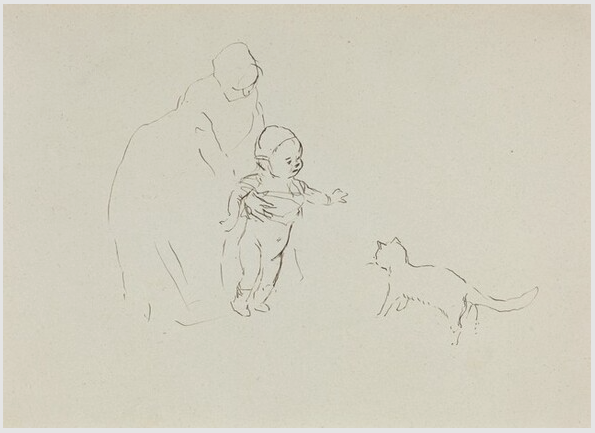
Here’s where I concede that, to some readers, the recommendation to spend time with families will seem obvious. If you’re already an Auntie with deep connections to multiple families and you’re still undecided about having kids of your own – well, I’ve been there, I feel you, and I’m sorry for extending false hope. This is why I said today’s strategy would be necessary but not sufficient. Please take comfort in the knowledge that you have enacted the single most important step, which huge numbers of people today never actually do.
People become parents without ever having spent time with children thanks to the nuclear family, which has recently been imposed upon us by government policy, housing infrastructure, and social expectations. I say “recently” because, in the span of human history, the nuclear family is a very new experiment (so far, so meh). Let's do some quick arithmetic. If we accept the estimate that modern humans have been around for 300,000 years, and we figure 25 years per generation, then we’ve had something like 12,000 generations of humans… and we’ve been doing nuclear families for like three of those generations, max. Until very recently indeed, humans (especially women) were around families and kids all the time, and now – quite suddenly – we are not.
During the most recent couple of generations, in more and more places around the world, people have begun growing up in nuclear family households with one or two adults (rarely more) as well as however many kids those adults produce. Once people have exited childhood, many don’t really interact with children again until they themselves have a child. The situation isn’t always this extreme, but nonetheless many people enter into parenthood with little idea of what children are like. As a parent friend of mine observed in a letter I shared a while back:
A lot of people do not understand children. Before I had kids, I did not like or understand them. We are not socialized to understand, appreciate, and respond appropriately to the needs of children unless we have them ourselves, and when we have them it is an insane crash course with an outrageous learning curve.
Now, I’m not suggesting that having children without knowing what you’re signing up for is a doomed experiment. While it’s true that people (especially women) have spent lots of time around kids and families in most cultures for most of human history, it’s also true that becoming a parent when you have no idea what you’re getting yourself into is a long and glorious human tradition. Best case scenario – which thankfully happens often – parents end up going, “phew, things were touch and go there for awhile but I’m so glad I had this kid.” And then they often say, “Let’s do it again!”
But let’s be real: Some people become parents and then discover they wish they hadn’t. Parents (especially moms) aren’t allowed to acknowledge regretting parenthood, but that doesn’t mean it doesn’t happen. Orna Donath spoke to 23 mothers who reported that, if they could go back and choose again, they would opt out of having children. Dornath observed that the numbers of such women are almost impossible to estimate because maternal regret is so stigmatized.[[2]] While conducting her study, she reported,
I was approached by several mothers who expressed regret for transitioning to motherhood but then cut off correspondence before I could schedule an interview; others cancelled their interviews just days in advance, because they feared expressing out loud a denounced emotional stance that until then they had kept to themselves.
This stuff is pretty brutal. It’s hard not to feel compassion for the mothers who regret parenthood, and also hard not to worry about how their regret impacts their children.[[3]]
People who are trying to decide whether to have kids frequently invoke the specter of regret; yet in my experience, regret is almost always raised in the context of regretting not having children. It’s hard to acknowledge the possibility that we could regret having children. Okay, but which would you rather? Not have kids and wish you did, or have kids and wish you didn’t? In the former case, you can offset regrets (if indeed they arise) by becoming an involved Auntie; in the latter, your choices are to gut it out and hope your kids can’t tell, or abandon them.
The point of this bleak detour is that becoming a parent is so consequential that it really, really helps to be able to make an actually informed decision.
Here’s what I think people (especially, especially women) should get to do: we should get to give our informed consent to having children – including informed consent to parenting under conditions of weak or nonexistent social safety nets. Imagine if everyone who became a parent had a decent idea of what they were signing up for and then they actively opted to go for it. And imagine if a lot of the people who had given it a good audition and were like, “actually, nah” instead opted to pitch in as Aunties? Oh my gosh, everything would be so much better all around.
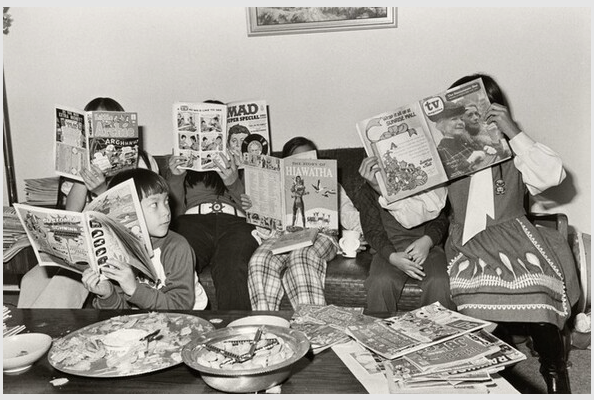
Spending lots of time with families gives us the absolutely, positively, unequivocally #1 best chance at making an informed decision about whether we want to be parents, and I would wish it on every person I love who’s trying to navigate this tough choice. I hope that one day soon the notion of informed consent to parenthood will take hold in the public discourse.
The Auntie Bulletin is a weekly newsletter about practical everyday kinship.
Indeed, prioritizing informed consent is how my partner and I, at long last, chose not to become parents. After a very lengthy (and expensive) process, we needed to finish some last administrative tasks in order to finally officially enter the pool of prospective adoptive parents – and we kept putting them off. Eventually we perceived that we were stalling, so we decided to take six months to put the kids/no kids question out of our minds and try to let things come clear on their own. At the end of six months, I still felt pulled strongly in opposing directions, but (having put in a lot of time with the kids in our lives) my partner had tipped toward remaining childfree. If I’d tried hard enough to talk him around he might have reluctantly agreed – but that’s not what I wanted for myself, for him, or for our kids. I decided to follow his lead. Gradually I became gladder and gladder about the path we had chosen, and today, I know down to my bones that we made the right choice. And we still get to live a lovely, childful life.
If you’ve put in your Auntie time and you still can’t decide whether to have kids or not, I’ll share one last perspective that’s been very helpful for me. Basically, you may just need to accept that, having done your due Auntie diligence and made yourself as informed as you can be, whatever you decide at this point will probably be a good choice. If you opt to have kids, you’re less likely than most to be surprised by the hard parts of parenting, and you’ll likely be glad you chose to have kids. If you opt not to have kids, you’ll probably be glad of that choice, too – like I am – especially since you’re already cultivating a childful life. As Daniela Lamas wrote for The New York Times recently:
The hardest part of any decision is always the uncertainty, the time entertaining two possible outcomes, not knowing what happens on the other side…. For many of us, there will never be that epiphany, that belief that the path we chose was the only possible one that could have led to a good life. There are simply two roads, two mutually exclusive paths. We each choose one.
Or heck, you could always try that thought experiment.

Nothing Sold, Bought, or Processed
The Auntie Bulletin is an ad-free, feminist, anti-capitalist publication that will never try to sell you anything (okay, except a paid subscription). We donate 100% of affiliate revenue from Bookshop.org to organizations supporting vulnerable kids. Now taking nominations for organizations to support in 2026! Drop your ideas in the comments.
If today’s post made you think or helped you out, please take a moment right now to become a paid subscriber. This newsletter is a form of carework and carework advocacy, and it’s how I make a living.
Thanks for reading all the way to the end! You get the secret scoop that if you can’t afford a paid subscription due to financial hardship, you can email me at auntiebulletin at gmail dot com and I’ll comp you a 12-month paid tier subscription, no questions asked.
[[1]]: In man-woman parent couples, it’s likely you’ll observe the mom doing more household and childcare tasks than the dad. When you get a chance, ask her if she anticipated this imbalance ahead of time; brace yourself for her to say no. My 26-year old neighbor and her boyfriend of less than a year are doing the Fair Play Method right now, and bless them for getting out ahead of it. I wonder if it’ll help Gen Z that they got the memo early? Let’s meet back here in 20 years and discuss it!
[[2]]: The number of men who regret fatherhood are easier to estimate since fathers frequently abandon their children – and at much, much lower social cost compared to mothers.
[[3]]: Monica Cardenas has a beautiful, difficult essay about being raised by a mother who regretted having children. I think about it all the time.