Why Sensitive, Neurodivergent Introverts Make Great Aunties

So 👋 many 👋 waving 👋 hand 👋 emojis 👋.
I don’t know about you, but the idea that sensitive, neurodivergent, introverted adults would be great with kids strikes me as counterintuitive. Those of us with sensory sensitivities (hi! 👋) often have very specific needs around lighting, noise levels, smells, messes, and bodies careening around – yet kids love to flick the overhead lights on and off, they bellow unexpectedly and for protracted periods of time, they make huge messes, and they’re often oblivious to other people’s personal space. We neurodivergent folks with our autism (me maybe? 👋) or anxiety (me for sure! 👋) or ADHD[[1]] or all three (plus whatever else, neurodivergence contains multitudes) – we often need things to be just so – yet kids don’t know or care about our systems and routines. As introverts (yep, very much me! 👋), we tend to be drained by social interaction, and we need quiet downtime to recharge – yet kids often want nothing more than our total and unceasing attention.
In spite of all these apparent incompatibilities, however, I’m here to suggest that hanging with kids can be oddly relieving for adults with sensory sensitivities and neurodivergences who otherwise need a lot of time alone. This is because kids have almost no social expectations, which allows us to actually be ourselves with them. Given our often significant needs for quiet, predictability, and downtime, however, it may make sense for us to have a part-time, Auntie-type relationship with kids.
Today’s post ventures into somewhat tricky territory that I’ll be exploring a lot more in 2025: why people might choose Auntiehood – perhaps even (I’m going there) instead of parenthood. Honestly, I’m nervous. I am about to make the pitch that, if you’re a sensitive, neurodivergent, and/or an introvert and you’re on the fence about parenthood, deciding to become an Auntie instead is worthy of your sincere consideration. My worry is that I’ll come off as criticizing or not understanding sensitive, neurodivergent, introverted parents, which is the last thing I want. Honestly, I have a track record of hurting people’s feelings when I least intend to, because I am not always great at diplomacy (autism, maybe! 👋).
So let me just start with this caveat: whoever you are, whatever your personality or needs, if you’re a parent or primary caregiver, The Auntie Bulletin is behind you. An essential aim of this newsletter is to have parents’ backs. Henceforth, I will be regularly publishing reader feedback (with or without the author’s name) in the Kinship Snacks, and if you’d like to weigh in on something I’ve missed or misunderstood, I sure do welcome your thoughts.
Okay, then.
Kids and Sensitive, Neurodivergent Introverts Have a Lot in Common
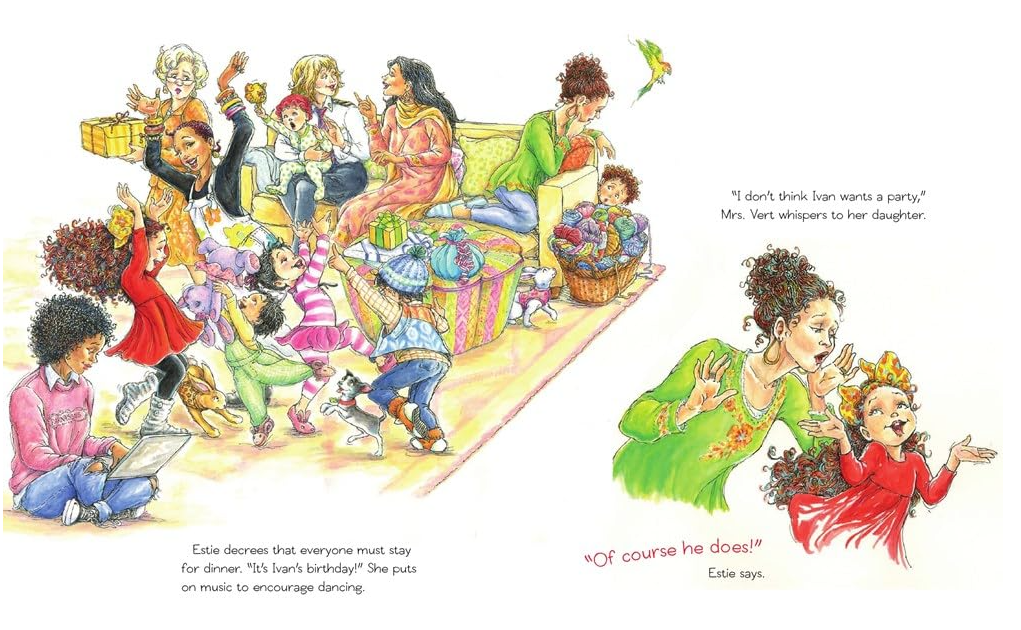
Imagine you’re at a party. It’s that time of year right now, so let’s say it’s a holiday party. 10 adults, or 20, or 30. Kids scamper underfoot. The lighting is bright, the music is loud, the conversations are many, shifting, and surface-y. Forget about a cozy one-on-one chat with your friend who you haven’t seen in awhile; even if you do manage to sit down with them, others will sidle up soon enough and almost inevitably change the subject away from whatever you were talking about that you were actually interested in. Or their partner or kids or your partner or friend will need or want something, or you’ll have to pee and when you get back your friend will be talking to someone you don’t really know and you will find that, in the midst of a party, you’re not really feeling up for meeting new people.
Meanwhile, you have this really great book waiting at home. Can you go home now even though you only got here an hour ago? Will the host think you don’t like them? You have some friends at the party whom you haven’t seen in a long time and you haven’t even talked to them yet. Are you allowed to leave without talking to them? Are you allowed to leave without saying goodbye to anyone? If you go sit in the car until your partner is ready to go, will people notice and think you’re weird? Is there somewhere you can hide?
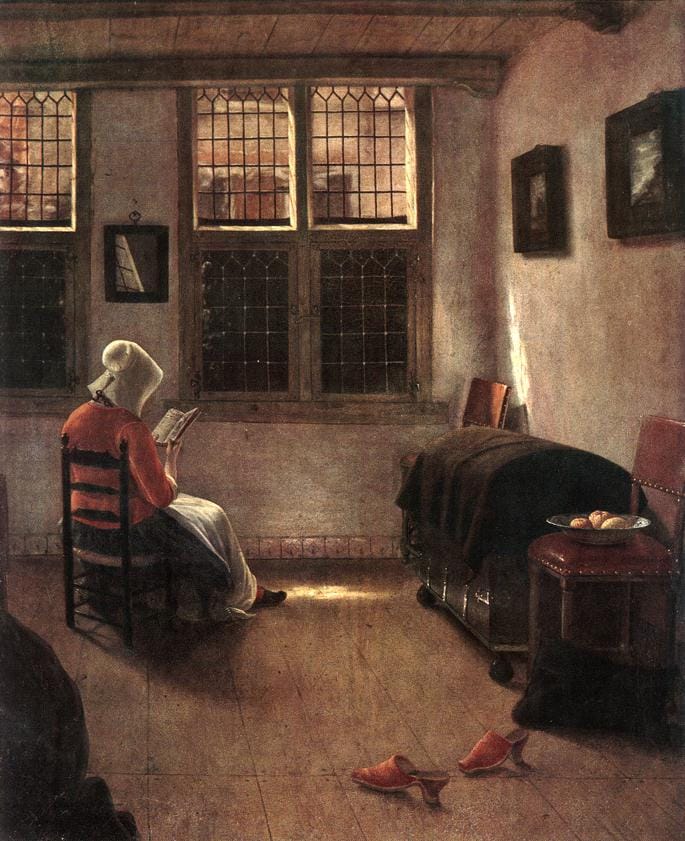
I am so fun at parties, can you tell? Even just writing about this terrible party is making me anxious. (It’s not this party’s fault; it’s every party. Down with parties).
If you go sit in the car people will think you’re weird; plus you’ll get cold because it’s December in this scenario. So here’s what you do: you go find the kids and you hang out with them until you can recover enough to go back and obligatorily talk to the grown-ups some more.
This is a thing I do all the time when I have to go to parties. This is a thing which, I suspect, many sensitive, neurodivergent introverts do at parties. Because for sensitive, neurodivergent introverts, despite kids’ frequent hollering and hurtling about, they’re often easier to hang out with than adults. Kids don’t make small talk, they are oblivious to social niceties, and they can’t really be offended. It’s such a relief. To use the language of neurodivergence, people like me can stop masking when we’re around kids – that is, we can stop trying to *act normal* or manage everyone else’s feelings, and instead we can just act like ourselves. It’s so straightforward. It’s so real. It’s so much easier. Even just writing about it, my body relaxes.
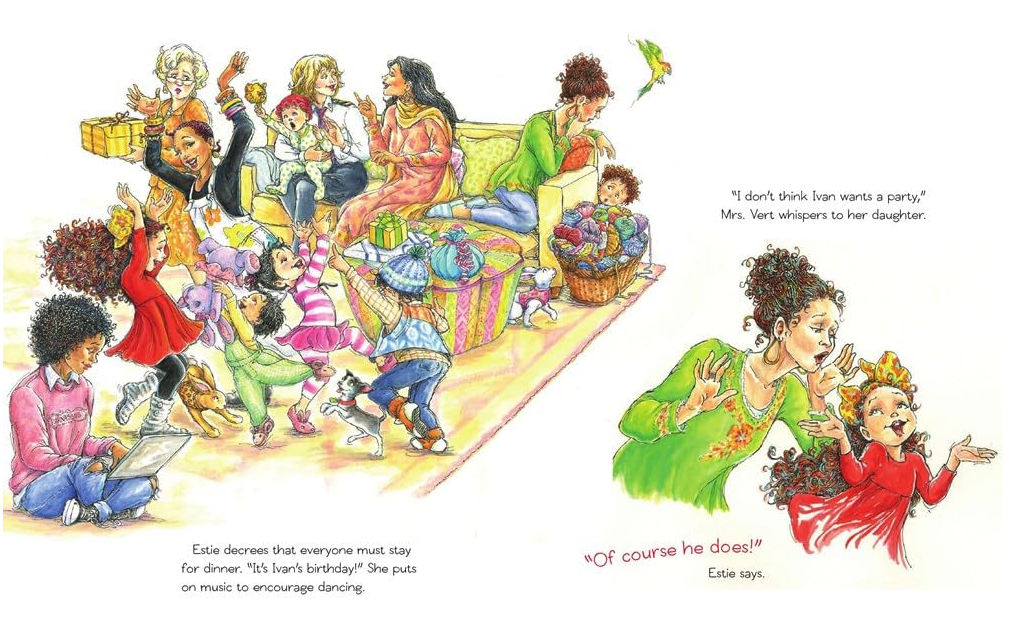
With kids, we can talk or not talk, whichever we want. They don’t think it’s weird if we abruptly announce we’re tired of talking about a given topic (ahem, Minecraft) and we want to talk about something else now. Meanwhile, if a kid isn’t interested in what we’re talking about, they’ll change the subject or just straight-up ignore us. It’s easy to find common interests with kids – dinosaurs, Simone Biles, bee stings, baby pandas – insofar as we all both keep tossing out whatever comes to mind until we find a topic we mutually want to talk about. And then it’s off to the races.
Sensitive, neurodivergent introverts may not be good at parties, but we have many other fine qualities. These often include truly listening to the person we’re talking to; noticing people’s facial expressions and wondering – and inquiring – about their possible emotions; and being willing to run with imagined scenarios. All of these are great for interacting meaningfully, lovingly with kids.
For example, in just the past few days, I’ve had great, focused conversations with kids about each of the following topics: What if you had wings, would they attach to the sides of your body like a bat’s, or just come out from the shoulder blades? What if you had a car that could drive upside down on the roof of a tunnel – how would it get back down when the tunnel ends? Would it hop and flip over or would it need some kind of off-ramp? And would you keep doing ballet if they said your friend couldn’t be a ballerina because she wasn’t skinny enough? In each of these conversations, both the kid and I were totally intrigued. We talked about it for exactly as long as we wanted to and no longer. And we reinforced our already strong bonds through this continuing evidence of shared interests. Then we both wandered off without saying goodbye, which is one of my favorite ways to leave. The kids heard Legos or bedtime calling their names; I had a really good book.
The Auntie Bulletin is a weekly newsletter about practical everyday kinship.
Which Brings Us to Auntiehood
Hanging with kids is so great. They are funny. They are sweet. They are surprising. They keep getting bigger and stronger and smarter and kinder and wiser and more amazing with every passing day. And they will positively rescue you at parties without even realizing it. But those compatibility issues I mentioned at the top of this post will never not be an issue for many people like me. Sooner or later, I always need to go home and read a book.
Even if we understand and truly accept kids, and kids understand and truly accept us, it’s still the case that sensitive, neurodivergent, introverted adults tend to need things to be just so. Personally, I do a lot better when I can manage the noise and light and mess and people-hurtling-around levels in my space. I do a lot better when I get a lot of sleep, a lot of alone time, a lot of unscheduled time, and a lot of quiet work time (and here I am, joyfully quitting teaching to become a full time writer, hi! 👋). I spent many years trying to become the kind of person who doesn’t need all these things so much, but what’s turned out to work way better for me is just getting my needs met.
I don’t want to be “childless” or “childfree.” Indeed, as an Auntie, my life is childful – and that is an important part of getting my needs met as well. I see the kids in my life all the time, and truly they’re among my closest friends – just as beloved and just as much a part of my community as their parents. So when those parents ask me to help out, I’m happy to say yes whenever I can.
But Aunties, here’s the crux. I can have these deep, loving, intergenerational friendships – and I can show up for my parent friends when needed – because Auntiehood is a part-time gig. My sensitive, neurodivergent, introvert superpowers make me a great Auntie, but I also suspect they might make me a pretty distressed parent.
We Can’t Know
When it comes to having or not having kids, we can never know what the other path would’ve been like for us. In her beloved “Dear Sugar” advice column, Cheryl Strayed once wrote of the parenthood/non-parenthood path not taken as “the ghost ship that didn’t carry us.”
I’ll never know and neither will you of the life you don’t choose. We’ll only know that whatever that sister life was, it was important and beautiful and not ours. It was the ghost ship that didn’t carry us. There’s nothing to do but salute it from the shore.
There’s a ghost ship on which I didn’t have four miscarriages, and instead my partner and I had kids. I’m confident that in many ways it would have been wonderful, and I suspect that if I had kids I might feel, like Strayed, “rattled by the knowledge of how close I’d come to opting to live my life without [my child].” Honestly, that line grabs my heart and yanks on it a bit, even now.
And yet, being real with you? As a sensitive, neurodivergent introvert who spends quite a lot of time with a lot of children whom I adore completely? I am so, so relieved to be an Auntie and not a mom. I think I would really struggle as a parent because it would be so hard for me to get my needs met – for order and downtime and all the rest.
Now, there are many parents out there who are sensitive, neurodivergent, introverted, or some combination of these. Of these, I believe many are happy and thriving, but I also suspect that some such parents – perhaps, indeed, many of them – are not quite so happy, not quite so thriving. Sensitive, neurodivergent, introverted parents certainly don’t love their kids any less than other parents. But they may have a harder time getting their needs met, and it might be particularly helpful for them to have one or more like-minded Aunties on hand (👋).
It’s actually difficult for any parents to be happy and thriving under the conditions they’re expected to navigate in the U.S. these days. It’s harder and harder for quite a lot of us to get our needs met. Just being able to make ends meet is increasingly out of reach for many families; reliable full time childcare is unaffordable and hard to access, as is healthcare, as is housing; there’s practically no such thing as a part time job with benefits; and in most places infrastructures and systems that would encourage community-building are thin on the ground.
This is why society needs Aunties, badly. As Jessica Calarco puts it, other countries have social safety nets, but the United States just has women. Truly, many other countries’ social safety nets are fraying, too – if they ever existed. To the extent that our elected officials let us down – and they are letting us down quite badly in quite a lot of places these days – we need people who actually want to take on supporting roles for families. We might need quite a lot of such people, in fact. So if you’re a sensitive, neurodivergent introvert trying to figure out whether to have kids, the good news is, you’ve got options.

Nothing Sold, Bought, or Processed
The Auntie Bulletin is an ad-free, feminist, anti-capitalist publication that will never try to sell you anything and donates 100% of revenue from Bookshop.org affiliate links to organizations supporting vulnerable kids.
If today’s post made you think or helped you out, please take a moment right now to become a paid subscriber. This newsletter is a form of carework and carework advocacy, and it’s how I make a living.
Thanks for reading all the way to the end! You get the secret scoop that if you can’t afford a paid subscription due to financial hardship, you can email me at auntiebulletin at gmail dot com and I’ll comp you a 12-month paid tier subscription, no questions asked.
[[1]]: I don’t have ADHD, so this is the flavor of neurodivergence I am least equipped to speak to. I know and love many people with ADHD, kids and adults alike, but I don’t know what it’s like to be inside that experience. Of course, even for the traits that do describe me, I don’t necessarily know what other people’s experiences are like. In this post, I make some educated guesses based on my own experience and those of various loved ones who are similar to me in some ways – but I also welcome your dissent!