How to Talk to Teenagers

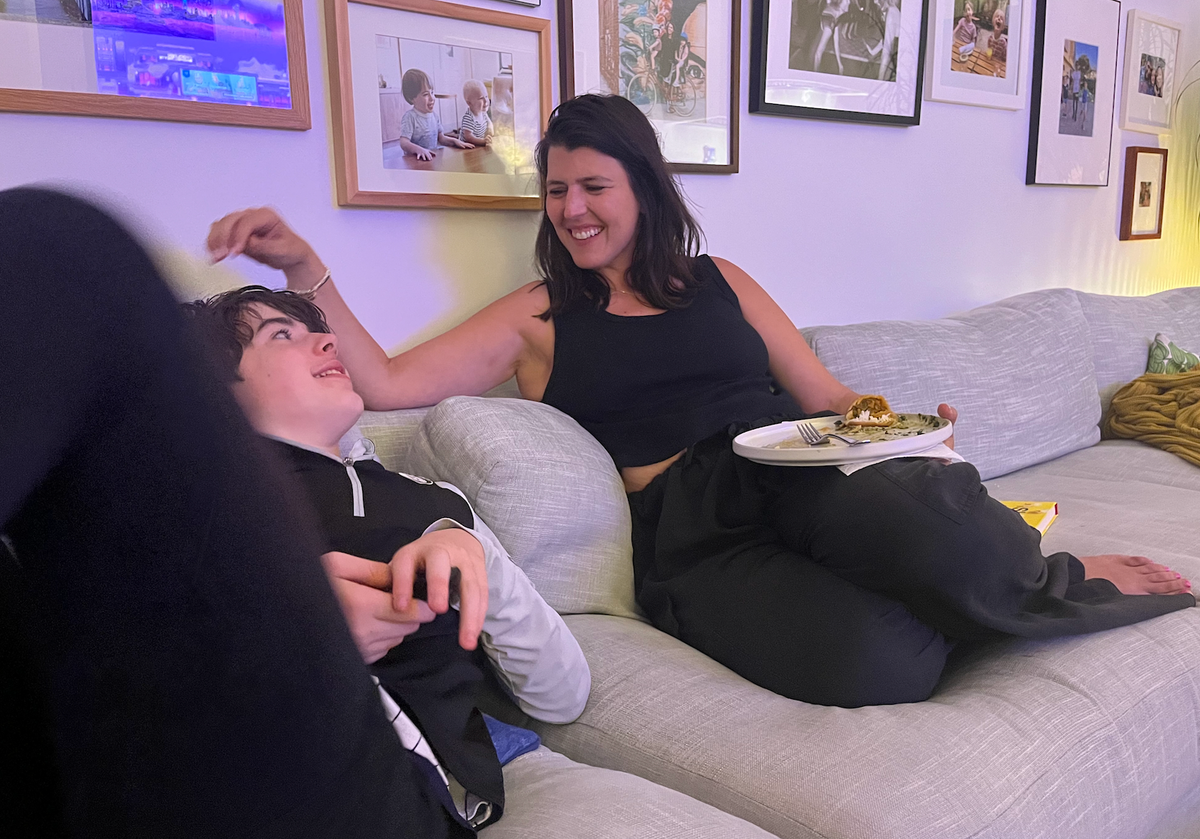
It’s totally possible to have a good relationship with the teens in your life. Here’s how.
Hi there, aunties on Ghost!
Today I'm reaching out to you about a conundrum I hadn't anticipated (although I probably should have): when we have a threaded discussion over on Substack (where Auntie Bulletin subscribers number in the several thousands), what should we do on Ghost (where our subscriber numbers don't even crack 100)? Realistically, a discussion in the comments on Ghost is unlikely to garner much participation, but I also don't want to just direct you over to Substack in order to read or join the conversation, given that you have good reasons for avoiding that platform.
What we're trying this week is offering, to subscribers via Ghost only, free access to a popular, otherwise-paywalled post from the Auntie Bulletin archives. This week -- apropos of our recent post about supporting troubled youth and their families -- it's How to Talk to Teenagers, which performed really well when it came out in November 2025 but was available only to paying subscribers.
Let me know if you have other ideas for what our Ghost auntie community should do when, very occasionally, there's a threaded discussion at Substack. Your suggestions are very welcome!
I wrote about how we don’t need to be intimidated by teenagers because they’re actually still kids, and they’re mostly total softies. Toward the end of that post, I quoted Auntie Bulletin reader Wendy, who left us with this wise advice: “Think about the adult you hope they will be and treat them accordingly.”
Love it.
Today we’re exploring how to interact with teens – not only how to treat them like the adults we hope they’ll be, but also how to effectively strike up a conversation, some ideas for what teenagers might like to talk about, and how to be there for them through the ups and downs of adolescence – even when we adults aren’t among their top priorities.
And hey, let’s just sit with that slightly painful reality for a minute: as they age into adolescence, the kids who once idolized us and hung onto our every word become more interested in other things. They roll their eyes at our jokes; they burrow into their phones; they become less interested in our shared relationship and more interested in navigating their increasingly complex relationships with peers.
If we adults take any of this personally, we will suffer. But I would caution us not to take it personally, and not to fret that anything is going wrong.
As I wrote previously, human adolescence is for figuring out who we are, and part of that process means learning independence and differentiating from the people who raised us. Prior to adolescence, children identify with their caretakers. They believe we are brilliant and beautiful and that we have an accurate handle on reality. Even when they get mad at us because we won’t let them have another fudgsicle or play Minecraft indefinitely or whatever, they still imagine we fundamentally know what’s up. But then, in adolescence, they start to be able to perceive our imperfections and biases. Teenagers are famous for accusing adults of hypocrisy because the teen years are when they become able to perceive and deeply question inconsistencies in adult behavior. This is a good thing (and it’s an important reason for adults to practice what we preach).
So how do we hold all this, though? How can we manage our emotions when our beloved little sidekicks have gotten too big and too busy and occasionally too cool for us?
My advice is to recognize that alloparenting and parenting alike are a long game. The more we continue to be there for the adolescents in our lives – regardless of how much they care about being present with us – the more they’ll understand that we are always a safe and welcoming landing spot. When they need a rest from spreading their wings, they’ll be back. And as they mature into adulthood, our relationship may well continue to blossom (to mix metaphors) in beautiful ways.
I have to put more and different effort into my relationships with my oldest godsons, who are now 20 and 17. When they were kids, it was enough to simply let them choose what to play or read with me. Now it feels like it can take more effort to get our interactions off the ground – at least with the 17 year old. Mercifully, the 20 year old has come out of that phase. – Annie
Alright, so along the way, how can we stay present with the teenagers we love? How can we keep our relationships with them strong and engaged? The balance of today’s post is all practicalities and concrete suggestions – from me and from the Auntie Collective. Many of the readers who responded to our collective wisdom survey this time around were either middle and high school teachers or else parents of teens, and boy do these Aunties and parents know what they’re talking about. In my opinion, what follows is some pretty darn useful stuff.
In the interest of my experiments with how to make a living, the rest of this post is paywalled. (As a tradeoff, November's monthly care package – a roundup of wonderful things to read and watch from around the internet – was free). If you’re working on scaling back your purchases of consumer goods during the holiday season, perhaps you’ll have the budget available to support my small business and upgrade to a paid subscription to The Auntie Bulletin. I’d sure love it if you’d join us!