Three Concrete Ways Youth Sports Help Heal Trauma

If you’re anything like me, this interview is going to blow your mind multiple times.
Hoo boy, aunties, do I have a good conversation for you today. I’ve published a lot of amazing interviews at The Auntie Bulletin over the past two years, but this one is up there with my all-time faves.
Maybe, like me, you are not much of a sports person. Nevertheless, do not touch that dial.[[1]] I’m talking today with three experts in the field of justice- and healing-centered youth athletics, which I did not know was a thing, but it is, and their insights are very, very good.
I had like half a dozen different aha moments during this conversation, including in response to:
- One of the wiser approaches I’ve ever encountered for supporting kids to regulate their emotions and process trauma – and I say this having spent a decade in teacher education, where we explore these kinds of questions all the time
- How cities from Chicago to Dallas to Seattle to Los Angeles are working healing-centered youth sports into their DNA, and sharing what works
- Actually useful insights on how to resist the “elitification” of youth athletics
- The youth sports org that requires kids to play basketball, baseball/softball, and soccer, emphasizes teamwork and social change over winning, and still makes it to the Little League World Series (with a girl as their starting pitcher)
- “It’s not the tough that works, it’s the love.”
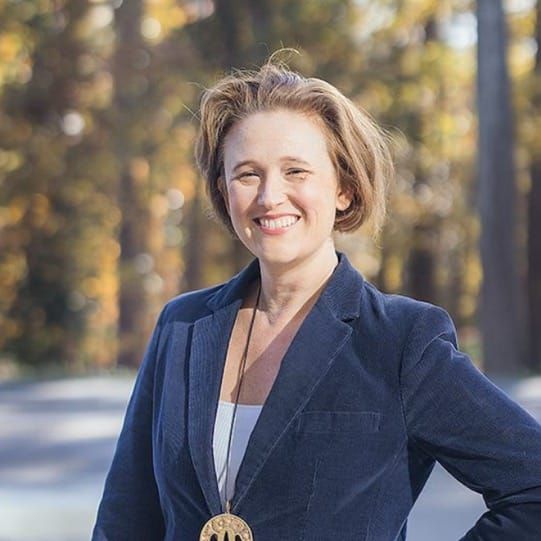
First up you’ll be hearing from Megan Bartlett, founder of the Center for Healing and Justice through Sport (CHJS), which is now officially my favorite athletics-focused nonprofit. I’ll introduce you to the other two excellent folks as we go along.
For serious, this interview is so freaking good. Hold onto your hats!
Now Let’s Get To It
Lisa Sibbett: So Megan, what’s the Center for Healing and Justice through Sport origin story?
Megan Bartlett: My co-founder, David Flynn, and I knew each other from our previous work. I had been building coach training programs, because coaches are wildly under-invested in. And David had been building collective action initiatives, looking at system change in the youth sports space. In 2017, we were both in a place where we were ready to build something on our own, something new, something different, and something that focused on the challenges in the space more holistically.
We asked, how do we change the quality of experiences young people have in sport? By influencing the adults who play such an important role, but also by influencing the systems that are governing, or in many cases, not governing that. We pulled together people that we were values-aligned with, and were real experts in the space, and said, “What if we operated a little bit differently and tried to influence the influencers?” We wanted to make sure that the change wasn’t just on a one-on-one level, but at a system level as well.

Lisa: What did you want to be different? Was there an aha moment where you saw what was wrong and what needed to change?
Megan: In sport we have this expectation that kids have to do whatever the coach says. It’s the coach’s way or the highway. What we do differently is help coaches understand that every kid’s path is different. That every young person shows up with a different story, and their story has a real influence on how they’re able to be part of a team, try new things, take on challenges and either be successful or fail and keep coming back. Each individual young person needs a coach who can be responsive to what they need. It’s about meeting kids where they’re at instead of just saying, “This is what we expect, and if you can’t meet it, we’re gonna kick you off the team.”
Now we’ll hear from Haviland Sharvit. She’s the Executive Director of the foundation that funds the Million Coaches Challenge, which I discussed with the same foundation’s Managing Director, Kevin Connors, a few weeks ago. Haviland has perspective on why philanthropists are throwing their money and influence behind CHJS.

Haviland Sharvit: I remember first going to a CHJS coaches’ training in Chicago. It was all centered on the kids, and there was all this talk about brain science, where kids’ brains are at in different stages of development, and what happens in the young person’s life when they show up on the field or on the court. I almost forgot that I was in a sports training because it was so focused on the young person, whereas other trainings were typically focused on the sport first. CHJS felt like the inverse – just so focused on how young people are actually showing up.
Okay, and now here’s Demetrius “Meech” Issac, a trainer with CHJS who also coaches an amazing youth sports team called the Anderson Monarchs. You’ll find out more about them later in this interview, and then you’ll be a Monarchs fan for life. Meech is also the Assistant Director of Campus Recreation at West Chester University. So many hats!
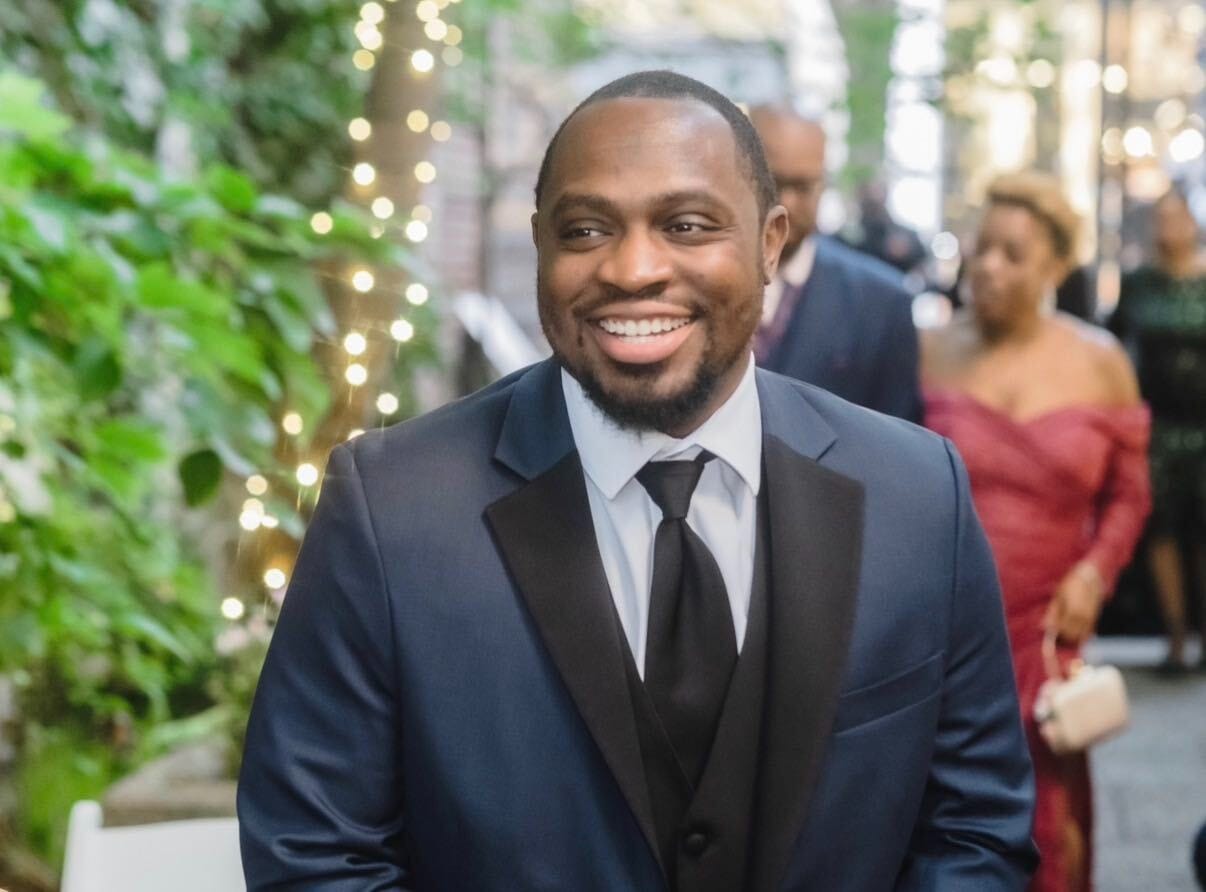
Meech Isaac: For me, my aha moment was about the brain science. The big thing about CHJS is that they help coaches understand why certain approaches work with youth athletes, and why certain other things might not be as effective.
When I was growing up, every single one of my coaches were all, “This is just the way we do things.” If you wanted to adopt what they were doing, you had to pretty much do exactly what they were doing. But insert CHJS, and now it’s like, “Hey, now you have a why, you can be creative and you can make things up yourself, add a little spin to it, however you want it to be, but you also understand why it’s working.”
Lisa: When you’re talking about the why, are you talking about, like, your spiritual goal or underlying purpose, or are you talking about why this strategy works to teach kids how to make a basket? Is it about the strategy, or is it about the larger heart purpose, or is it both?
Meech: It’s both. The brain science of it helps with, if someone is stressed, how to get them down from being as stressed, right? Understanding that part, and understanding what works for them, so that once we do get into practice as coaches, we’re able to say, “okay, this is not working right now, how can we pivot in a different direction in order for us to get to our goal?”
Lisa: Preparing for this interview, I kept hearing about how CHJS emphasizes brain science, but I honestly wasn’t really tracking why that’s important. As I’m talking to you, I’m starting to wrap my head around why it matters so much. I come from a high school teacher background, and then I taught teachers, and I’m thinking about the very similar learning trajectory for teachers. It’s not just about how or what we teach, but also: how do people learn? Whether it’s math or history or gymnastics, what moves help learners really understand how to do what we’re asking them to do?
So what’s a piece of brain science that coaches learn at CHJS that really pops out to you – where you’re like, “Wow, that’s so cool”?
Meech: When I first started getting trained with CHJS, our trainer talked about dosing stress. She gave the example of lifting weights. She talked about how you’re not going to go into a gym and throw all the weights that you possibly can onto a bar, right? You work your way up. Maybe you start with the bar. After you can lift the bar, you feel pretty good, now let’s add a few more weights. Feels pretty good, let’s add a few more and see how far we can go from there, and how much you can improve. That started to help me understand how to coach young people in a way that could work for them.
Lisa: That’s so interesting. I can immediately imagine how you would work your way up from the lower challenge to harder challenge in softball, in football, in track.
If this newsletter is deepening your understanding of youth athletics and why they matter, show your appreciation by upgrading to a paid subscription!
Megan: One of the things we find with coaches is that they can see the need to dose stress when you’re teaching a sports skill. But then we also ask coaches to broaden their perspective and say, “when we’re trying to learn social and emotional skills, you have to do the same thing.”
Because coaches’ expectation is often that if you’re 15, you show up like a 15-year-old. Coaches often think they should be able to show up socially and emotionally, but that’s not always the case. What often excludes kids, right, the ones who get kicked off the team are often those who struggle to show up socially and emotionally.
Many coaches are willing to take on the challenge of, “Oh, they can’t do a left-handed layup yet? Well, I can work on that.” But they’re less able to take on the challenge of, “Oh, this kid can’t regulate their emotions? I don’t know how to take on that challenge.” So then coaches might try just throwing kids in the deep end to see if they can swim, as opposed to building that challenge in a way that, to Meech’s point, doses the stress and helps them build skills.
I think one of the coolest things about brain science and sport is that when you understand how the brain takes in and processes information, you come to understand that there are very few environments as powerful as sport in terms of teaching your body and brain to regulate stress.
When we do it right, there’s this unique combination. We’ve got positive adults who make you feel safe, because your brain is not open for learning if you don’t feel safe. We’ve got the dosing of stress. Sometimes you get caring adults and dosing stress in the same environment, but in sport you also get the third piece of movement, of physical activity. So you have the protective factor of adults, the resilience building of dosed stress, and the chemical and neurobiological function of movement. If we don’t empower coaches to understand why that combination is so valuable, we’re missing a huge opportunity.
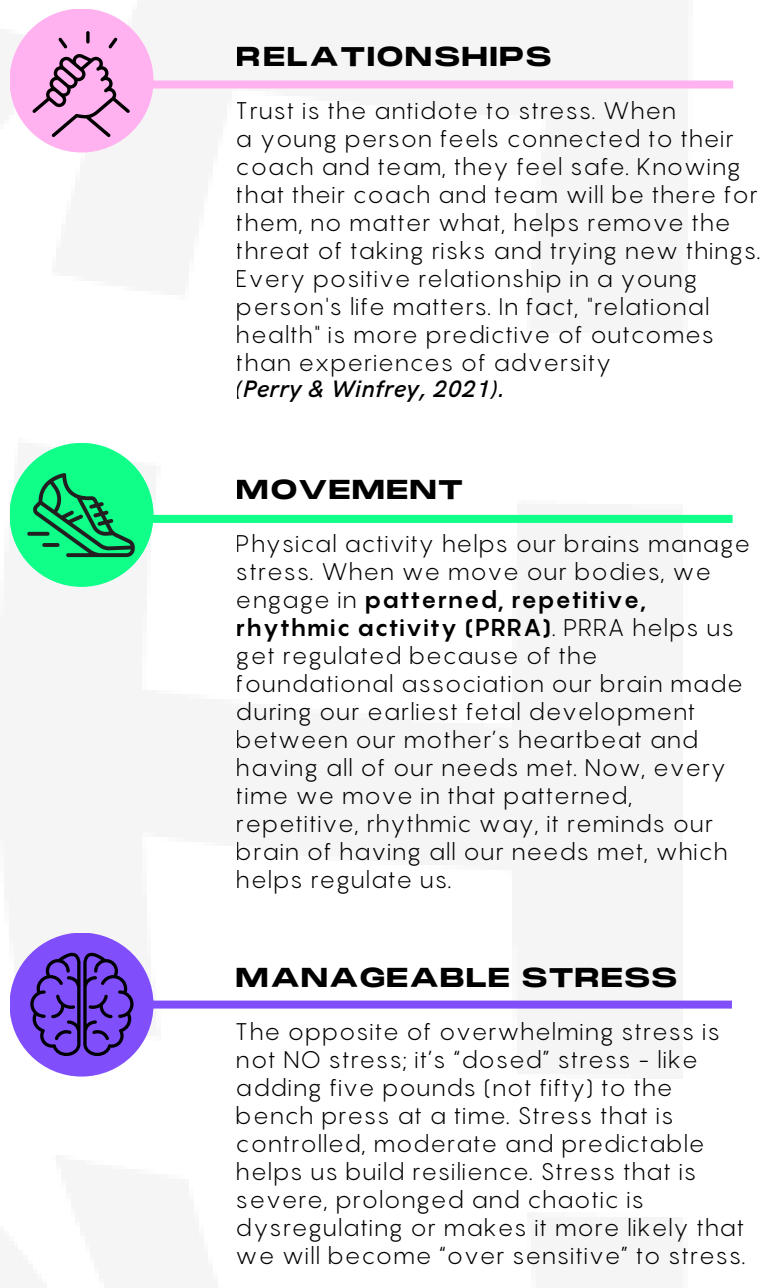
Lisa: You sound like you’ve got this three-sided equation deeply ingrained in your soul. It’s really powerful, wow! (Ed. note: It’s also deeply ingrained in CHJS’s open-source, free for all playbook, Nothing Heals Like Sport, which is bonkers insightful and practical, as well as open source and free for anyone to use. You should share it with all the adults in your life who have anything whatsoever to do with athletics. They will love it, OMG).
I’m wondering, Haviland, what stood out to you as CHJS was being selected as a partner organization in the Million Coaches Challenge?
Haviland: Part of our goal with Million Coaches is not just to train coaches, but to work on systems change. CHJS brought this comprehensive approach that wasn’t just coach training, but also the collective action and influencer piece in a way that really connected with youth well-being, with social emotional learning, and with positive youth development. They went above and beyond just the training of coaches.
Megan: When the Million Coaches Challenge started, there were six million coaches that needed to be trained. And now that the Million Coaches Challenge is over, there are still six million coaches that need to be trained, because of turnover.
There’s only so much an individual organization can do if we’re training coaches only. We can have this great individual impact, but that lasts only for the group of kids a coach works with. And even then, the coach takes their team, which they’re coaching in a healing-centered way, to a tournament with a bunch of people who are not doing that. Overall, we are not operating in a healing-centered sport environment. So no matter how we empower coaches, they are only one piece of a larger system.
We knew that in order to change the system, we have to be attacking it at different levels. So, we do a fair amount of consulting work at the league level or system level. For example, how do we embed in Chicago Parks the kind of knowledge and approach that they can own – that makes them a healing-centered parks system? As opposed to just having us show up to do their summer camp counselor training every year, which is what we used to do. We started with things like the summer camp counselor training, but then systems like Chicago Parks were asking, “How do we get this to be in our DNA?”
The other piece we do is help organize city-based coalition work. You mentioned you’re in Seattle, Lisa. In Seattle there’s something called the King County Play Equity Coalition, which is made up of organizations who are trying to make systems change at the, in this case, county level. One of the things that the King County Play Equity Coalition has been able to do is change recess policy. That requires a different kind of work than coach training.
There are city-based coalitions around the country that are doing that kind of work, and we serve as a sort of connective tissue between them – connecting the work that Chicago’s doing with the work that Seattle is doing with the work that Dallas is doing. We’re working to make sure that they’re all learning from each other and spreading the wins around. So if Chicago now wants to do some policy work, they can learn from what worked and didn’t work in Seattle or Los Angeles.
Lisa: I didn’t know about that Play Equity Coalition in King County, but I definitely do know about the initiatives around recess. It’s a big deal here. There’s real inequity in recess time in King County.[[2]]
Megan: Yep. There’s inequity in sport play and movement in major ways.
Lisa: Sidebar, but maybe it’s worth just talking about this for a minute: I have a friend whose kids are involved in very elite soccer, and the amount of gatekeeping in terms of both the cost to play and the way that they run tryouts has been an ongoing moral struggle for her. She’s like, “I don’t want my kids participating in this toxic system and at the same time, they’re really passionate about soccer and they’re really good at it.” It seems like a recurring dilemma all over the place, in all kinds of different sports, so I’m really glad that y’all are working on that.
Megan: Yes, the elitification of youth sport is a massive problem, both from a resource perspective and from a talent perspective.
Lisa: Including even who gets to have their talent nurtured.
Now, Meech, can you talk about how you got involved with CHJS and what youth coaching roles you have now?
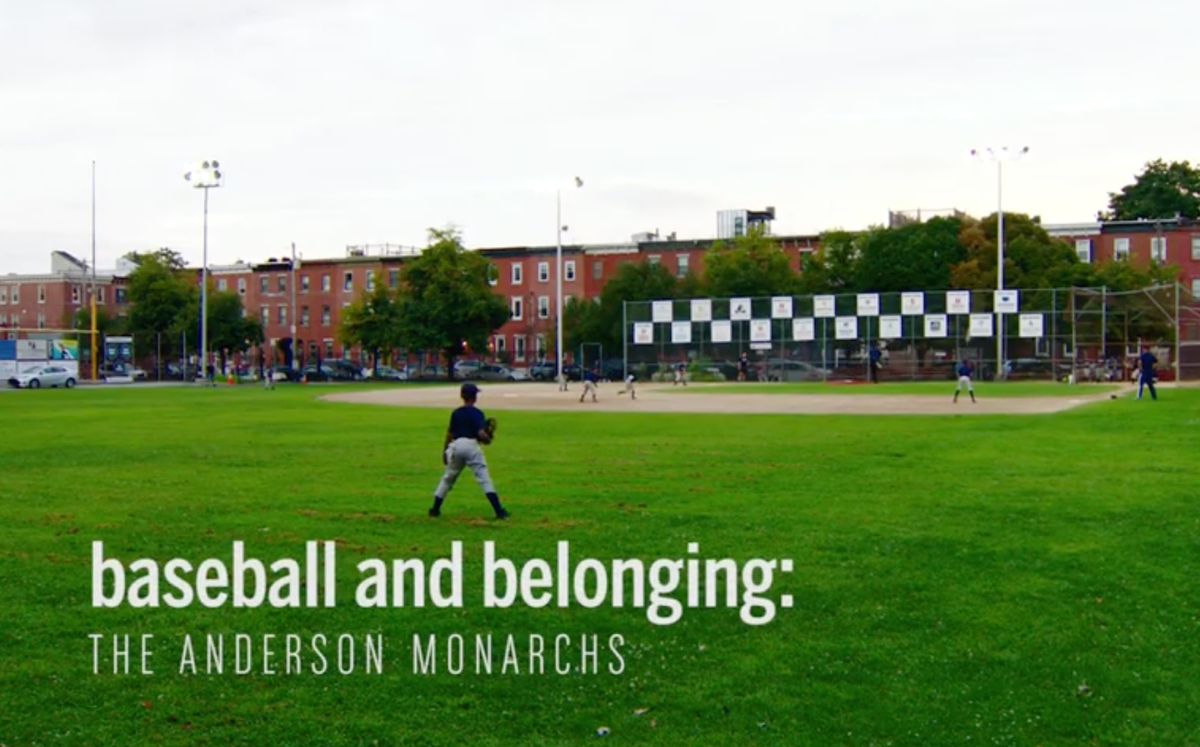
Meech: I coach for the Anderson Monarchs, which is a youth sports organization based out of Philadelphia. The Monarchs are unique because they have three sports that every kid has to play. They have to play basketball, baseball, and soccer. The Monarchs were founded in 1995 by Steve Bandura, and I’ve played through the program my entire life. I was blessed enough to coach full-time with them during COVID, and then I transitioned to West Chester University, and now I coach for the Monarchs part-time. They’re still thriving and doing really well.
So when CHJS came and talked to some of our coaches and parents, I happened to be in the room and felt like we were just speaking the same language. The trainer was like, “Hey, would you want to come to Chicago to train?” And I was like, “Let’s try it!” I hit the ground running with CHJS and now I’ve been a trainer with them for three years. It’s been an awesome ride. I absolutely love them.
Lisa: So with the Monarchs’ three different sports, why are they doing that?
Meech: The idea of it was, if you are able to play three different sports, you have to understand how to be effective in each. You may be really good at basketball, but you may not be as good in soccer, right? So how do you adjust in that situation? You’re used to being the top guy in basketball, you score all the points, whereas when you get to soccer, now you may not get to play as much. How are you still affecting the game? Are you still a good teammate? How do you deal with failure? Just by playing multiple sports, and knowing that you may not be as good in one sport as you are in another, you still have to figure out how to make sure that you are impacting the team.
One of the things that Steve preached a lot was just being a good teammate. It doesn’t matter how good you are, it doesn’t matter how far you can throw a baseball, doesn’t matter how far you can kick a soccer ball, doesn’t matter how good you are in basketball. You can always be a good teammate.
So the three sports is definitely unique, but I think it pays a lot of dividends for what we talk about with CHJS, too – with just dealing with a lot of trauma, dealing with a lot of stress. How do you change it from a negative situation to a positive situation?
Also, everybody together for that long really builds relationships that a lot of other organizations don’t have. A lot of the kids that I played with when I was eight and nine years old, I still have really close relationships with them today. Some of us actually coach together with the Monarchs now.
Lisa: I love that.
Megan: And Lisa, if you think about it from a larger youth sport lens, so much of what we were talking about with the elitification of youth sport has to do with the pressure to specialize. There’s pressure to only play soccer year round, even though we know that it’s not good for kids, generally, it’s not good for talent development, it’s not good from a burnout perspective, it’s not good from a body perspective. Even just the cross-training that comes from playing multiple sports!
Every youth development recommendation in youth sport is to not specialize, to play multiple sports. I think Steve cares way more about the good teammate part, but he’s also going against the grain of what’s wrong in youth sport. He’s saying, “I’m going to prove that my baseball team is still going to make the Little League World Series, even though they only do baseball during baseball season, and they do basketball and softball and soccer.” Steve is a stick-it-to-the-man guy. All of that is wound up in why the Monarchs are the way they are, and they really do serve as a case study for what youth sport could and should look like.
Lisa: This is really blowing my mind. I’ve never heard of anything like this, but it’s really cool. Are there girls’ teams?
Meech: About two years ago, Steve started all-girls programs where they play softball, basketball, and soccer. Just this summer, they went to Sweden for the summer. It’s been awesome.
Megan: There’s also a fairly famous girl. She’s now playing in the professional women’s baseball league. Her name is Mo’ne Davis, and she pitched in the Little League World Series. She was on the cover of Sports Illustrated at the time, and that was when she was part of the Anderson Monarchs.
Lisa: Isn’t the Little League World Series boys?
Megan: Technically girls can play in Little League.
Lisa: Well, I’m definitely going to put that Sports Illustrated cover in this article!

Megan: Please do!
Lisa: I should tell you, I’m really not a sports person. I’m definitely more knowledgeable about the performing arts than I am about sports. But Kevin and I talked about this recently, about the many overlaps between the performing arts world and the sports world, and just youth extracurriculars in general. I’m thinking about the pressure on kids to specialize in the arts as well. My goddaughter is currently in her first year of college at performing arts school, and there’s a lot of expectation to specialize in dance or singing or musical theater or whatever. It’s very exciting to get to hear about all of this in the sports world and think about applications for youth performers as well.
Now, let’s talk about healing and justice through sport. I was digging around on the CHJS website and encountered a lot of language like “healing trauma” and “against police brutality” and “social justice.” You don’t usually see that kind of language in the athletics world, and if you do, it’s because Colin Kaepernick’s taking a knee and now the local high school soccer team’s taking a knee and everybody’s losing their minds. There’s all this controversy and acrimony, a lot of people saying that politics doesn’t belong in sports – and then here you are.
Megan: Right, “shut up and dribble.”
Lisa: Yes, exactly. It’s so refreshing to see all this language being foregrounded at your organization.
So I’m curious. What’s gained when we understand athletics through these kinds of social justice and healing-centered lenses? What does this approach reveal that business as usual sports doesn’t let us perceive?
Megan: For us at CHJS, it comes down to what we were talking about before, which is that we believe really strongly that sport is uniquely suited to help young people heal, right? It’s uniquely suited not just to cope with stress, but to actually rewire the way your brain takes in and processes and deals with stress in a way that, if we use it correctly, is better than a 50 minute therapy session.
Lisa: How?
Megan: Because the experience of trauma or significant adversity or overwhelming stress is an embodied experience. There is a physiological impact of trauma on the body and the brain, and the only way to change that, to build resilience to stress is by experiencing it. We believe sport is uniquely suited to do that. (Ed. note: You must watch this Instagram clip. You must. I was in teacher education for a decade and I never encountered this research and I really wish I had).
We know that young people who are exposed to overwhelming stress or trauma are less likely to have practice regulating their emotions, which means they sometimes exhibit behaviors that adults label as disruptive or difficult or violent. When kids can’t regulate their emotions in ways that meet the expectations of adults, that can have a significantly detrimental impact on them, particularly if that young person is a Black or brown student.
Lisa: That’s where we get the school-to-prison pipeline.
Megan: Exactly. You get disengagement from school, all of the things that we know happen disproportionately to young people who’ve been affected by trauma. We think sport can play a role in reversing that. At the same time, we know that young Black men are the least likely to be engaged in clinical services or mental health services. And sport is reaching those communities in a way that those services are not.
So we have this workforce of adults that are out there having an impact on young people, and if we can change that impact to be positive, there’s a massive opportunity there. And so to us, the experiences of healing and justice are intricately linked. The potential for young people who have a healing-centered coach to have a different set of life outcomes feels like the ultimate goal.
Meech: Unfortunately, especially in youth athletics, it doesn’t seem a lot of coaches are in it for the right reasons. A lot of it is around winning. The spaces aren’t necessarily built to be positive for the players. They’re not built to help players understand what it takes to deal with this certain thing that’s going on in your life, right? Speaking for myself, I am more worried about whoever I’m coaching. I’m worried about how they develop not just on the field, but more importantly off the field.
One thing that the Monarchs pride ourselves on is that we want to create agents of social change. So we want everybody that’s been a part of our organization to be the best person they can possibly be. We want them to go out into the world and change the world in their own way. Just because you’re not playing that sport forever does not mean you cannot impact the world in a positive way.
We look at athletics in the lens of, “Listen, this isn’t the end-all, be-all.” Yes, we want you to be the best you can possibly be, but this is a learning tool for you to understand how to deal with life. We’re fully transparent about that. We’re telling them, “Look, things are going to get tough. You are going to get stressed. You are going to have to deal with trauma. Things aren’t going to be fair. How are you going to deal with it? How are you going to impact the world in a positive way, even if these things aren’t going your way?”
It makes all the difference, especially with the youth, if they are able to say, “Hey, if my goal was to make the NBA or MLB or FIFA League, that isn’t the end-all be-all. If I don’t make that, I can still impact and be successful.” Being able to look at it from that aspect adds more to what the kid can be, and what the options the kid can take, and how successful their development is throughout the process. It’s super important to create spaces for them to believe that, and believe that they are able to be successful, even if it’s not necessarily winning every single game or hitting a home run every single game.
Myself personally, I’ve lived it, I’ve learned it, and now I’m able to teach it. It’s great being able to see it from that lens, and also distribute that amongst those who I’m able to coach.
Lisa: That’s beautiful.
Megan: Meech, something about what you were saying made me think of this. There’s an incredible coach, whose name is CJ Stewart, and he lives in Atlanta and built a baseball program for Black boys on the west side of Atlanta. He was a professional baseball player, and he and his wife built this program over years and years. They’d been doing this probably about ten or fifteen years when we met.
CJ came to a training with us, and I remember him sitting back in his chair and putting his hands behind his head. He said, “So Megan, what you’re telling me is that when we think about sport as a vehicle for tough love, it’s actually not the tough that works, it’s the love that works.” And I was like, “That’s exactly what I’m telling you.”
Because sport has this norm that it’s the tough that works. And I think when we help coaches understand that actually kids are tolerating your tough because they know you love them – and actually, you can just do the love, you don’t need the tough part. That’s a little bit of the why that Meech was talking about. It’s a different way of understanding your approach, and I think the fact that it’s rooted in brain science convinces even people who might think that I’m just the Kumbaya Lady. That makes a big difference in terms of people’s ability to see through what they have been accepting as the norm.
There’s so much that has to change about sport in order for us to have coaches who lead with love, as opposed to coaches who lead with tough. It’s a massive undertaking, but that’s the change we’re after.
Related Reading from The Auntie Bulletin
 LISA SIBBETT
Nothing Sold, Bought, or Processed
The Auntie Bulletin is an ad-free, feminist, anti-capitalist publication that will never try to sell you anything. We donate 100% of affiliate revenue from Bookshop.org to organizations supporting vulnerable kids. We’re currently supporting NICWA, the National Indian Child Welfare Association. Learn more here.
If today’s post made you think or helped you out, please take a moment right now to become a paid subscriber. This newsletter is a form of carework and carework advocacy, and it’s how I make a living.
Thanks for reading all the way to the end! You get the secret scoop that if you can’t afford a paid subscription due to financial hardship, you can email me at auntiebulletin at gmail dot com and I’ll comp you a 12-month paid tier subscription, no questions asked.
[[1]]: Is “don’t touch that dial” a reference everyone knows? It might be geographically and generationally specific, I’m not sure. It means stay tuned, don’t change the channel, you don’t want to miss this. I have just looked it up and apparently, the line originated with the 1939-1950 radio series of Blondie (!), which I did not know was anything other than a dimwitted and gender essentialist comic strip in the newspaper. Turns out it was also a successful 1938 feature film, twenty-eight (!!) full-length follow-up films, and the aforementioned radio program.
[[2]]: About a decade ago, there was a big parent movement to make lunch and recess time more equitable across Seattle Public Schools. At that time, on average, schools in the more affluent, whiter parts of the city had more more lunch and recess time, and schools in the more ethnically diverse and working class parts of the city had less – based on the (empirically inaccurate) rationale that more academic seat time would help raise test scores. Here’s an explainer of the state of play at the time. Fast forward a decade, and although the King County Play Equity Coalition recently helped pass a state law guaranteeing 30 minutes of recess in all elementary schools, experts still argue that 30 minutes isn’t enough. Meanwhile, Seattle Public Schools’ new superintendent recently directed elementary school principals to limit recess to 30 minutes a day in order to fit in more academic time. 🤦♀️