Kids Deserve Great Athletic Coaches

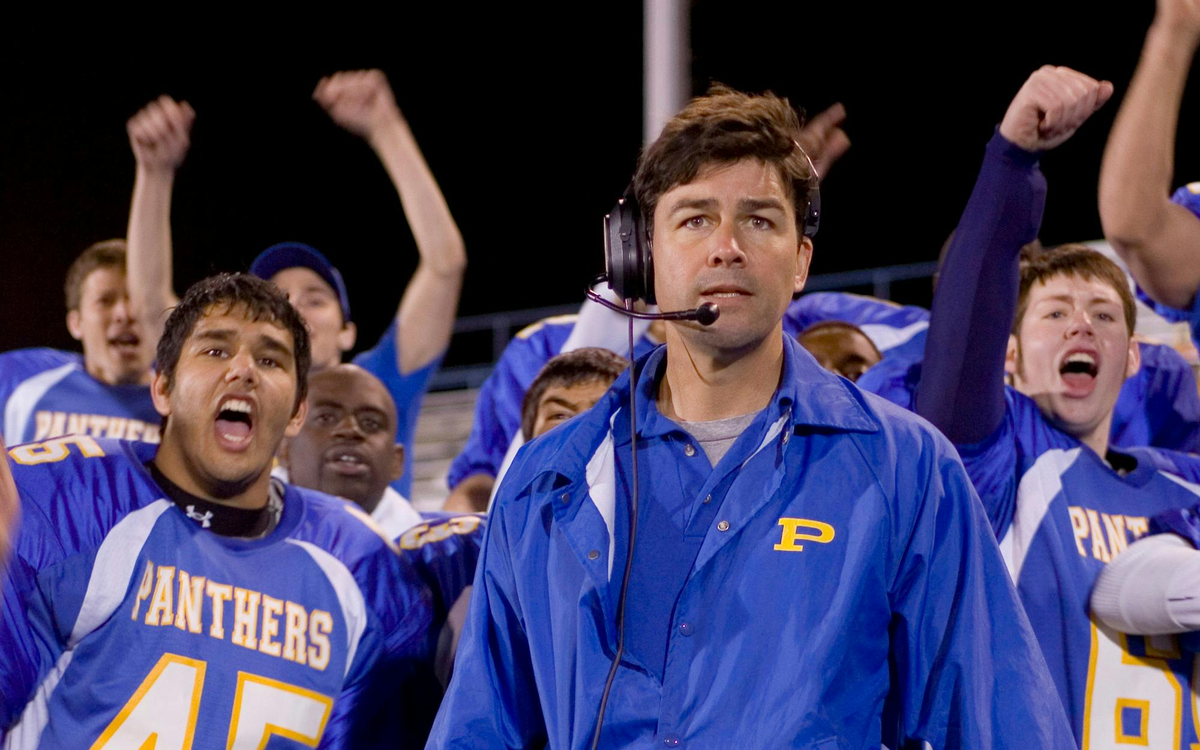
Coaches merit our attention because they have a huge impact on kids’ lives.
Hey aunties. I want to share my gratitude for the lovely messages many of you sent me in response to last week’s post about how I can’t keep up. Your comments and DMs made me feel so much better, so much less like I’ve been dropping the ball. I am filled with renewed appreciation for the beautiful, wise community we’re building here together. Thank you so, so much.
The interview I have for you today is a little different from our usual fare, but I’m stoked about it and I think you should be, too. We’re typically very women slash femme slash nonbinary coded here at The Auntie Bulletin – very cozy, very informal, very vulnerability-forward. It has to do with the kind of person I am (homebody, nerdy, domestic, comfortable wiping butts), the kind of vibes I cultivate, and the kinds of readers who gravitate toward those vibes.
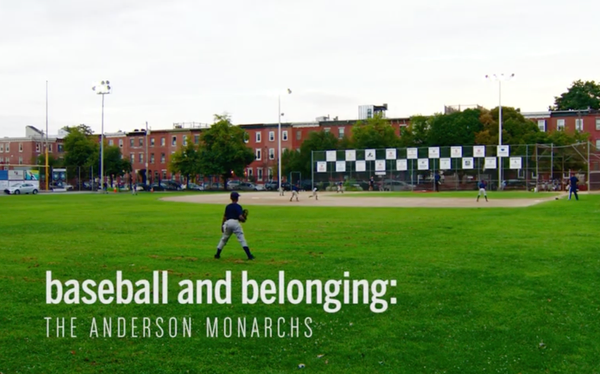
But at the same time, aunties do multiple kinds of vibes, not just my kind. Lots of aunties are sports people, or at least get-out-and-move people, and more importantly, lots of the kids we love are these kinds of people. I personally might want to sit around at home reading The Wind in the Willows and crocheting a tea cozy,[[1]] but the kids I love play soccer and baseball and basketball and ultimate frisbee, and they swim and do taekwondo and mountain biking and golf and gymnastics and track. And for every sport there is a coach (or hopefully more than one), and for a lot of kids, their coaches are among the very most important adults in their lives.
Today I’m talking with a guy named Kevin Connors, who’s going to tell us about a truly cool initiative called the Million Coaches Challenge. Over the past half-decade, MCC has supported a score of major youth sports organizations like Little League International and the National Recreation and Parks Association to train well over a million athletic coaches in youth development and youth mental health. This work is very needed because youth coaches mostly come from an I-love-this-sport background, or maybe a my-kid’s-team-needs-a-coach background, but not often from a how-to-get-a-large-group-of-eight-year-olds-to-work-together background. And these skills are not remotely self-evident. Just the other evening, in fact, a friend of mine was telling me about filling in for the head coach for her kid’s under-8s soccer team and how it was impossible to get the kids to do anything.
Yet lots of coaches do get kids to do stuff! They get kids to do stuff as a team, in an organized way, repeatedly, and in adverse weather conditions. And in the process, they help kids learn to have each other’s backs, be brave, work hard, take feedback, try again, lose resiliently, win graciously, hold their heads high, and other habits and dispositions which, when lots of people in a society cultivate them, serve to make the whole society better. All coaches deserve to feel confident and equipped to support the young people in their lives, and all kids and communities deserve access to great coaches.
What I’m saying is that while youth athletic coaches may not always resemble our mental picture of aunties, many are alloparents of the first order. They merit our attention, curiosity, investment, and affection. And the fact that they’re often quite dude-coded just means they’re filling alloparental roles that we fiber-arts-oriented, gentle homebody nurturing types cannot – which is a very good thing.
So now let me introduce you to Kevin and the Million Coaches Challenge. Our conversation includes:
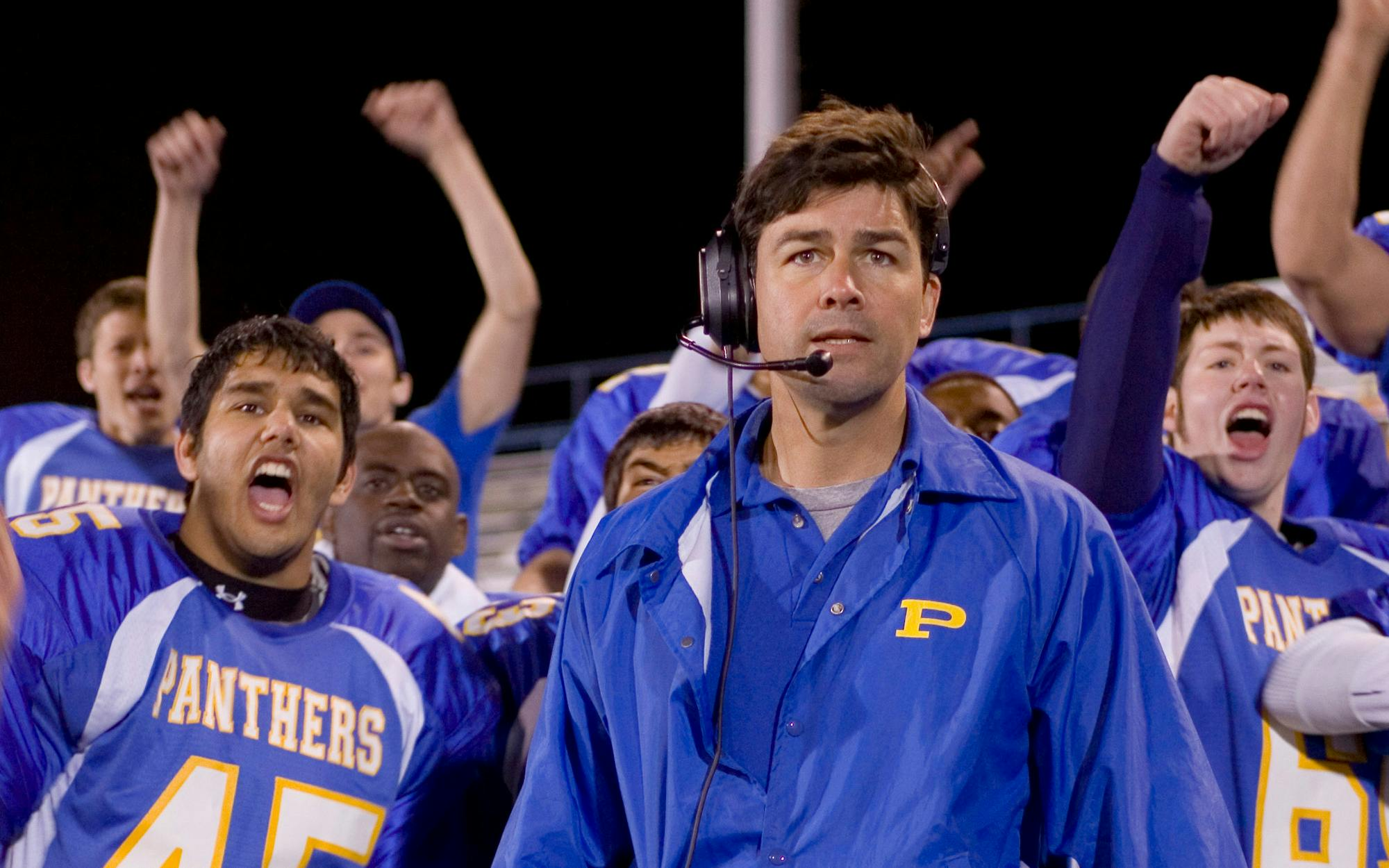
- Me acting like I know what the phrase “Xs and Os” refers to. (Actually I do know, I have watched Friday Night Lights, okay?)
- The joy of watching a talented kid just hauling ass down the track and leaving every competitor in the dust – and what it takes to equally support the kid who loses every race (i.e. me, circa 1993).
- Twelve core practices of good coaching – which turn out to be relevant for performing arts teachers, too. Featuring a handy graphic!
- Four concrete ways aunties, alloparents, and primary caregivers can help ensure that all communities have great youth sports coaches.
Below, behold the nerd and the jock discussing our mutual shared beliefs that alloparents are essential and all kids deserve to thrive. It’s goddamn beautiful, aunties.[[2]]
You can watch the video of our live conversation on Substack here, or read the transcript below — including an aside in which I reflect on a part of the interview which I completely misunderstood until my friend, the former college basketball player, set me straight.
Lisa: We don’t have a lot of public conversations about the role of athletic coaches, even though they are incredibly important and load-bearing. Some coaches only see a kid for a year, but a lot of them are with kids through much of their childhood. Certainly a lot of high school coaches will be with kids for four years. So today I’m really excited to talk with Kevin about the Million Coaches Challenge. Kevin, can you tell us about the program?
Kevin: It feels fitting today, on National Coaches Day, to have this conversation. I’m here to celebrate the six and a half million coaches who are supporting over 38 million young athletes who participate in organized sports every year. This is a topic that’s near and dear to my heart as a former athlete and coach and now a parent of kids who are in the youth sports system. And obviously it’s a topic that touches communities all around the country.
The Million Coaches Challenge is an initiative that was launched by the Susan Crown Exchange. We’re a foundation. We make grants to organizations across the country who are supporting young people to thrive. And we focus specifically on the environments and relationships that most shape a young person’s life. For nearly eight years, we’ve been deeply involved in the youth sports space, just recognizing the immense power that sports and coaches in particular have on a young person’s development.
The Million Coaches Challenge was born out of this understanding that coaches, the research shows, are the most trusted adult in a young athlete’s life outside of family. Yet there’s this massive gap in the way that coaches are supported. Only a third of the country’s coaches have been trained in youth development, and they by and large are often left to their own devices to figure out how to support the diverse and emergent needs of the young people that show up on the sidelines. The Million Coaches Challenge was trying to answer this question: How do we close that gap? What would a world look like where every young person had access to a coach who felt empowered and confident and prepared?
Ultimately, we supported eighteen organizations across the country who collectively trained more than 1.1 million coaches in youth development and mental health.
If this newsletter is helping you build a more connected and interdependent life, please upgrade to a paid subscription!
Lisa: And you worked with a lot of the big youth athletics organizations, like Little League and Girls on the Run. Can you share what some of those partner orgs are?
Kevin: We put out an open call in 2021. It was on the heels of the pandemic, you know, where life for all of us and young people in particular was just completely disrupted, right? School, sports, friendships. Everything about the way young people connected with each other had been completely disrupted, and sports were one of the first spaces that were welcoming kids back. Coaches were put in this position to help welcome kids back and rebuild those relationships.
We saw this opportunity, and we put out an open call and said, who wants to join this effort? We had nearly 60 organizations across the U.S. put in ideas, proposals, and initiatives. And ultimately, we had eighteen that we supported. And it was everyone from National Rec and Parks – so think about our recreational experiences, our park district soccer that my kids are participating in right now – to school-based sports initiatives to Little League. And then the Olympic movement as well, those elite spaces.
So from ages five to eighteen, it was intentionally trying to support organizations who were working across the youth sports experience. And by the end of the initiative, we were really struck by this notion that all of those groups came together and said, at the end of the day, good coaching is good coaching. The fundamentals are the same no matter what experience or what environment you’re in. And that was our big goal with the Million Coaches Challenge. How can we insert mental health and youth development as a core part of what great coaching looks like?
Lisa: I think that’s so cool. It hadn’t ever really occurred to me that this could be a thing that somebody could do, is think across all the different athletics and bring together coaches from all these different sports. It kind of blows my mind.
And to be clear, I am not a sports person. I was a swimmer as a kid. I swam competitively from age ten or so through high school. But I was definitely the person who’s afraid of a ball and traumatized by P.E. I think a lot of my readers are somewhat theater nerds like me, and intimidated by sporty people. But actually, this is a really important, powerful place for us to be thinking, because we might have kids in our lives who are sporty people. And I wish that I’d had, as a kid, more of a feeling of empowerment in athletic spaces.
Kevin: Between theater and sports there are so many similarities in the type of experience that offers for a young person, and then the role that the teacher, the coach, the theater director plays in a young person’s life.
The question we’re always asking is how can we support those youth-serving adults to show up and feel confident? And we feel there is this aspect of sports, as you were describing, that can either bring out the best in you and build confidence in a young person, or can do the opposite. It can wear a person out and make them shut down. I’ve seen that in my own kids already over back-to-back years with very polar opposite experiences. The opportunity to get it right feels really significant.
Lisa: You mentioned the differing experiences of your kids in youth athletics. Could you set the table for us around your personal experience with youth athletics, both as an athlete as a kid yourself, and now as a parent and former teacher and coach? What’s your landscape there?
Kevin: I’m certainly someone who was formed on the playing field. I’m the youngest of three boys, and I grew up in a family where sports was part of our identity. I remember my parents saying that our three priorities were school, sports, and family.
Lisa: Wait, they said sports second?
Kevin: They said sports second. I’m not sure if there was an intention there. I grew up with a healthy level of competition, especially as that youngest boy always trying to keep up with the older siblings and their friends.
Looking back on my own childhood, even though I had a very positive public school experience, I had great teachers, and was successful by a lot of those metrics, it was my coaches and my teammates who most shaped me at the end of the day. I remember coaches who helped me through hard times, who welcomed me back and gave me second chances, who got to know me as an individual. That stuck with me so much that I became a high school baseball coach in my 20s when I was teaching – and now, of course, I get to do the work I’m doing today.
I’m no longer a high school coach, but I’m a youth sports coach dabbling in a number of sports and reminding myself that it’s not easy to get out there and coach kids. Even if you played the game or have coached before, coaching kids is a special opportunity and it takes support and resources.
Lisa: I’m curious about the coaches who supported you through hard times. Do any stories come to mind?
Kevin: When I was a freshman in high school, I was playing multiple sports at that point. My high school baseball coach had also been my eighth grade teacher, so he knew me, he knew my family, and he knew that I had played baseball for my entire life. Tryouts came around freshman year, and I was nowhere to be seen. I had made the decision without telling anybody that I wasn’t going to play.
Lisa: Do you remember why you wanted to give up baseball?
Kevin: It was, “I think I’m a football player. I think I’m a basketball player.” I wanted to be a kid. You’re working through all your sense of self at that age. The night after the first practice, the phone rang in our kitchen. This is when you had your phone with a 10-foot cord and everyone could hear your conversation. My coach called and asked where I was and what I was thinking and feeling. He said, “Just come try. It’s okay that you missed the first day. I’ll welcome you back. We’ll talk about it.” And 10 years later, I became a high school baseball coach myself.
Here was someone who didn’t levy a punishment or to say, “You made a poor decision.” It was recognizing you’re a 14-year-old kid with a complicated set of emotions. “Come back. We’re here to support you.” And that turned out to be the sport I identified with most at the end of my teenage years.
My friend described to me how serious, competitive youth athletes can wind up not quite knowing who they are outside of their sport or sports. Their participation is all-encompassing, their friends are all athletes, their very wardrobe signals who they are, and they often get put in a box by others. My friend also described the increasingly high expectations around discipline and showing up every day. She told me about a common mantra in competitive athletics: “If you don’t show up today, you can’t show up tomorrow.” Under such conditions, she said, getting cut from a team is heartbreaking, but quitting brings its own sorts of pain and alienation. Walking away is a big deal, and so is missing tryouts.
When I thought about all this some more, I realized that I have a much more robust frame of reference for what happens when a person doesn’t show up for an audition: they don’t get to be in the show, end of. Easier for me to comprehend the sanctity of the rules in the performing arts context, more difficult in sports – but of course, there’s very little difference.
My friend explained that the way I show care as an auntie might be pretty different from the way a high school baseball coach shows care, but letting a kid know they’re wanted is letting a kid know they’re wanted. And actually, this coach was signaling a very high level of investment in kid-Kevin, communicating – as my friend put it – “I believe in you, and to show it, I’m going to give you several hours every day for the next four years.”
Having heard all this, I understood better why Kevin picked this story as his example of a coach being there for him. And also, my friend was like, “Lisa, some people don’t want to share their traumas publicly on the internet.” Which, I mean, fair.
Kevin: Fast forward to my own kids’ experiences. My oldest is a second grader and last year he was playing flag football for the first time and it turned out to be a very overwhelming experience for him. There were a lot of advanced ideas and concepts and a lot of new kids, and it was very sports-centric. My son struggled with keeping up and understanding his place and started to shut down a little bit. This year, we encouraged him to play again, and there was a new set of coaches. They’ve been really focused on building a sense of team and keeping things simple and age-appropriate. As a result, we’ve already seen this light in my son.
Lisa: I suspect that typically people come to coaching because they love the sport. But really understanding what are the needs of a group of little six-year-olds on a field, that’s a whole ‘nother set of expertise that coaches may or may not have.
Kevin: That was one of our organization’s learnings when we started to dive into youth sports and really understand the system. Because maybe we’ve played, we’ve coached, but we learned that it’s a big myth that just playing the game is enough. There was this belief that participating teaches you to be a great teammate, teaches you how to overcome adversity, teaches you how to set goals and work hard to achieve them. But actually there are intentional practices or moves that coaches need to do, and environments that coaches need to shape. There are things we can do every day as coaches to create those environments, but they don’t just happen by accident.
I’m sure the same would be true for a theater director or a classroom teacher. There’s professional development and training and resources for a lot of youth-serving adults, but for some reason, coaches have been overlooked.
Lisa: You’ve had more occasion than most people to really think through what makes a good coach. What do you want for your own kids?
Kevin: You know, for the longest time we all equated great coaching with the X’s and O’s, and then maybe the health and safety component. What drives me in our work at Coaches is about adding a third leg to that stool. What I want for my kids is what I hope for all kids: that coaches help build resilience, build a sense of teamwork and positive peer relationships, and help kids navigate challenges.
We can tell this is happening from the signs that kids give you at the end of the day. I want them to come back at the end of the day and feel they are part of something bigger than themselves. That’s the true magic and power of sports to me.
Lisa: A lot of my readers know that I have hypermobile Ehlers-Danlos Syndrome, which is a collagen repair disorder. It means I have really loose joints and was a very unathletic child. I joined the track team in eighth grade because my best friend had a crush on a guy who was a runner. She talked me into joining. And every single race that I ran that year, I came in literally dead last.
For a kid like me, a high bar would have been being able to somehow feel successful. But even just feeling like, “This is fun” – even though other kids are faster than me, other kids are more coordinated – being able to actually enjoy it and want to keep coming back would be one of those signs you’re referring to, that something’s going right.
Kevin: What enabled you to feel that?
Lisa: Oh, I didn’t! But it’s what I wish for my younger self. I stuck out the season, which I’m proud of myself for doing. I assume there were probably some adults – coaches and/or my parents – who helped me do that. But really all I remember is losing over and over again, which was so demoralizing. It was not a good sport for me. Running is not super safe for my body, but we didn’t know that when I was a kid. What I would hope for a kid that I love is that they would get to have a different experience, though, you know?
Kevin: What I also hear in that story is that the entry point was through friendships and relationships. That social aspect of sports or teams is really the foundation for so many young people. So how do we build from that? How do you build a great sense of team based on those relationships?
I think that’s where we can think about the adults, whether it’s the parents or the caregivers or coaches or league administrators, and the signals we’re sending. How are we shaping the culture and expectations so that every kid feels like they have a chance to succeed and contribute?
Lisa: When I see a kid just hauling ass down the track, leaving everybody in the dust, it’s just like, “Yes!” It makes me so happy for that kid. It makes me so proud of them. And of course, coaches are going to feel so excited about their really talented athletes. But I would also love coaches to also feel a lot of empathy, care, and support for that kid who’s like, “I’m going to walk.” I know a girls’ school where they play kickball at lunch every day, and every kid in the school is seemingly excited to play – whether they’re actually good at it or not. It feels like a really beautiful vision of what’s possible.
Kevin: What you’re describing makes me think about one of the resources that came out of the Coaches Challenge. Across all those organizations that participated, from Rec and Parks to school sports to the Olympics, there were twelve common practices of what great coaching looked like. We had the American Institutes for Research on board as a partner to bring some rigor to the study.
Two of the things you just named were part of those practices that every coach should know and do no matter what age group, what gender, what environment. One was showing up with empathy and meeting every kid where they’re at, no matter what their skill level is or what other characteristics they’re bringing to the table. And another was about creating an environment that celebrates growth and learning and effort, not just the outcome. That is such an unlock for kids to say, “The process matters. My effort matters.” Because that’s the lifelong skill, right? That’s the magic of sports.
Lisa: Totally. I want to actually show the graphic y’all have of these twelve core practices. I find this really helpful. Can you give us an orientation to this?
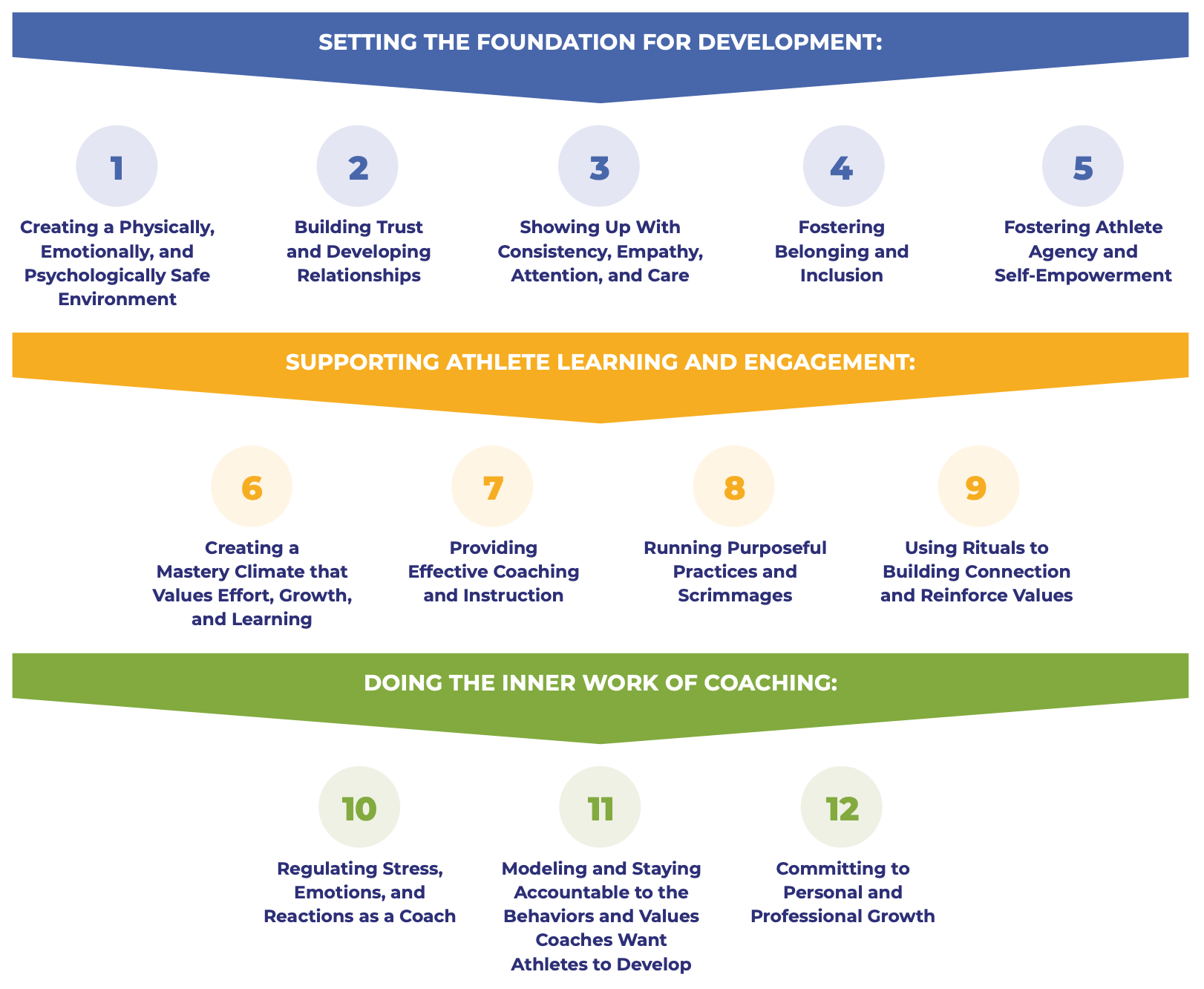
Kevin: Very little of what I’ll talk through here is actually about the X’s and O’s; it’s about having transferable skills or practices that apply in a lot of different environments. I think that’s exactly the point and one of the biggest learnings here.
So, there are twelve practices here, organized into three categories. That first one, called “Setting the Foundation for Development,” is really about a recognition that coaching is about developing the whole young person, not just the athlete. Coaches are the ones who set the tone for whether kids feel safe, included, respected, whether they feel excited to come to practice. In the guide, there are examples of ways you can actually build trust. For example, you can dedicate time early in a season to have individual conversations with each kid, to not just know their name but to know their backstory, know what brought them to the sport, know what makes them nervous, know what their goals are. You can start to build trust that way, and start to build a sense of belonging for all kids when you have a better sense of who they are and what they’re bringing into the experience.
The second category is called “Supporting Athlete Learning and Engagement.” This is about actually using the unique properties of the sport itself to help young people grow and develop. And again, as a former teacher and a former high school coach, I thought that almost half the work was done for me when I was meeting my kids out on the playing field in this way. It’s easy for coaches, for example, in #6 to become very concerned about the outcomes, about the statistics, about the wins and losses, even as early as second grade in some cases. But in reality, what all of our research showed us, across different contexts, was that what leads to both better on-field performance and also more life skill development, is creating a sense of mastery and effort and celebrating those things.
Then the last category is called “Doing the Inner Work of Coaching.” It’s a recognition that coaching starts with the coach themselves. Our friends at the Center for Healing and Justice Through Sport, one of our eighteen partner organizations, will say that a dysregulated adult cannot regulate a dysregulated child. We need to check our own assumptions, our own biases, and manage our own stress if we want to be able to do the same for the young people that we’re supporting.
Lisa: I hadn’t anticipated that the parallel world of youth performing arts would keep coming up, but my mind keeps going there. I’m noticing that, within this framework, it’s like #7 and #8 are the only ones that are really sports-specific. This framework might be a real service to all kinds of different youth activities, because all of these skills are important for folks who work with kids. I love the service that you all have offered by putting this framework out there.
Now I want to speak to the practice around fostering inclusion and belonging (#4). There are big public conversations happening about inclusion and belonging in youth athletics right now. The two that leap to my mind are around access to elite sports and then also around transgender athletes, although there are, of course, lots of other topics related to inclusion and belonging in youth sports. Could you unpack for us sort of what this practice includes?
Kevin: Absolutely. The access question, as you said, is so prevalent right now. It’s a North Star conversation. We have to ask ourselves: how can we ensure that every young person has access to a high quality experience? That means one where they feel they belong, they’re included, they have an important contribution to make to a team. And how do we make sure that coaches are fully prepared to coach in any environment they find themselves in? Whether it is an elite level with a high pressure on performance, or it’s being prepared to coach whoever shows up on their sidelines. Coaches are at the center of so many of these cultural dynamics. How can we make sure that every coach in America, no matter where you are, what state, what location, is prepared and confident to support that work?
In the practice guide, we include examples from some of our organizations. There’s a group called How to Coach Kids, which has a free online 30-minute training for coaches of kids between the ages of 5-18. You’ll find specific recommendations about how to support kids who are coming from different identities, whether that’s gender identity, whether that’s an identity related to income level or with race, you’ll find recommendations that are research-based from all of our partners about calling kids by the names by which they identify, ensuring we refer to teams as “our team.”
There are practices where coaches sent out surveys at the beginning of the year to parents and caregivers, to get to know the kids better. They’ll ask, “What kind of coaching does the kid respond to? What strengths do they have that we can build from?” And they found time to seek feedback during the season as well.
Lisa: Before this call, I was telling you about a friend of mine who has a kid who is a very dedicated and talented soccer player. My friend has struggled over the years with the gatekeeping and the expense of elite soccer, the amount of travel and generally who can access these elite teams. She’s described tryouts for these teams and how the kids who are already on the elite team are at a different tryout than the kids who are not on the elite team. The elite team coaches might not even see the kids who aren’t already on that team. Some of this must be set up by the coaches themselves, who are making decisions about how they’re going to run the tryout. Some of it is around just the cost and the locations: which families can get there and which families can understand the communications materials about where the games are going to be, and which families can afford to fly to Phoenix for a soccer tournament. Do you have any insights about if we could improve this? How could we make, for example, elite soccer less elite?
Kevin: Last weekend, I had a conversation with a friend whose kids had experienced a similar experience with baseball tryouts. I have my days, certainly, where I step back and say, “If only we could have the program administrators, the heads of these leagues, change their culture and their policies.” On other days I’m like, “If only the coaches could set a different tone,” or “If only the parents would make different decisions.”
The level of deregulation and fragmentation of youth athletics has created a bit of a perfect storm for a lot of families where costs can be out of control or there’s limited slots on a team. Or for parents, there’s this fear of missing out or fear of being left behind, that we might be doing some disservice for our kids. My wife’s a social worker who’s been working in elementary schools for fifteen years. We stay up every night and say, “Are we doing this right? Are we putting our kids in the best position to succeed?” We feel those temptations.
So at a big macro level, with the sports system in the U.S., we’re now trying to support organizations through Million Coaches who are trying to make some dents in the system. We could make some headway by lifting up the data that shows what’s best for kids and what experiences help them grow the most. It’s not always that hyper-competitive, high-end experience.
Lisa: The Million Coaches’ conclusions focus largely on how parents can advocate for great coaches for their kids. I want to expand that out to include alloparents and adults in the general community. How can we help build a world where we have really well-resourced and great coaches for any kid who wants to participate in athletics?
Kevin: I love this question. What’s a recommendation or tip I could take home tomorrow? Four things that come to mind. One is, it may sound very simple, but it’s truly to celebrate a coach in your life. Thank them, approach them, talk to them about what it’s like to coach. Thinking about my own coaching experiences, when a parent comes and asks questions about what it’s like to corral twelve eight-year-olds at a flag football practice, that humanizing creates a sense of connection where we can have more open dialogue.
And in particular, in those conversations, naming the specific practices a coach has done that have really resonated with a child goes a long way. Saying, “hey, I noticed that last Wednesday when you brought the team together and celebrated my son or daughter and their effort, I saw them light up and they kept talking about it that night before bed.” Those small positive affirmations go so far and are little clues to coaches that we should keep following that train of thought.
Lisa: It’s actually a good way to influence all humans’ behavior. I just really love that. Hold up a mirror to the best things they’re doing.
Kevin: It’s that strengths-based approach. Coaching is hard, I’m going to make mistakes. But when I hear back there are things I’m doing well, it makes me want to do more of that.
The second is to volunteer, yourself. We have a coaching shortage. We’re in a dire need for more coaches, particularly ones who care deeply about young people. You don’t need to be a college athlete or even a high school athlete to coach. There are resources available to you to learn some of the basics of the sport so you can show up with enough confidence. But there are also resources about creating these environments of belonging and inclusion and empowerment for young people. So I’d say volunteer to coach yourself. There are lots of opportunities, particularly on the recreational side, to step up and be that really critical role model for kids in your community.
Number three, ask the league or the program how coaches are being supported. So if you’re interested in more environments that are really child-centered, send an email to that local park district or to that local league and say, how are coaches being supported? What training, if any, is available to them? It’s just a sign that parents and caregivers care, that they’re paying attention, that it matters.
And then lastly, just be that role model yourself at home, in the car ride home the next day when you’re picking them up from school or on the sideline. How can we model the behavior and the expectations that we’re hoping our coaches are also promoting? These are all practical things we can start doing tomorrow.
Lisa: Well, Kevin, it has been a delight to talk to you.
And this is such a great launch and framing conversation for continuing conversations we’ll be having at The Auntie Bulletin over the next several months. In just a couple of weeks, I’m going to be talking to a leader and a coach from an organization Kevin just mentioned earlier called the Center for Healing and Justice Through Sport, which is a really cool organization. A big prong of what they do is think about how sports can help young people – and also the adults that are involved in the world of sports – to address trauma. I think we all intuitively know this, that a lot of kids who have experienced trauma, the playing field is where they work through some of that stuff.
I’m delighted to be launching this area of inquiry at The Auntie Bulletin. Kevin Connors, thank you so much for being with us today!
Nothing Sold, Bought, or Processed
The Auntie Bulletin is an ad-free, feminist, anti-capitalist publication that will never try to sell you anything (okay, except a paid subscription). We donate 100% of affiliate revenue from Bookshop.org to organizations supporting vulnerable kids. We’re currently supporting NICWA, the National Indian Child Welfare Association. Learn more here.
If today’s post made you think or helped you out, please take a moment right now to become a paid subscriber. This newsletter is a form of carework and carework advocacy, and it’s how I make a living.
Thanks for reading all the way to the end! You get the secret scoop that if you can’t afford a paid subscription due to financial hardship, you can email me at auntiebulletin at gmail dot com and I’ll comp you a 12-month paid tier subscription, no questions asked.
[[1]]: I have never read The Wind in the Willows and I do not know how to crochet.
[[2]]: Take that, John Hughes.