The White Space in Your Calendar is a Service to Your Community

Reframing unscheduled time
Prior to the COVID-19 pandemic, I had a super busy life. During the 2019-2020 school year, for example, I was finishing my dissertation[[1]] and teaching graduate-level teacher preparation classes at the University of Washington. I was coaching novice teachers all over the region, driving to schools in multiple districts to observe their teaching in action and support their professional learning. I was in a weekly in-person writing group and I travelled to two or three academic conferences each year. I’d also recently gone through multiple pregnancy losses and countless medical appointments, and now my partner and I were taking classes and attending a support group for prospective adoptive parents, as well as completing a daunting amount of paperwork in order to get into the prospective adoptive family pool.[[2]] Also, we’d recently moved into co-housing with our friends and our friends’ kids. Our community game nights often started as late as 9pm, after the kids were finally asleep. My calendar was jammed, and looking back, I have no idea how I sustained the pace.
These days, there’s so much more white space in my calendar. Some of this is due to my very reduced capacity: after I had COVID, my Ehlers-Danlos symptoms escalated and have never returned to baseline. I simply can’t work as much as I used to. I’ve also become more protective of my energy. Even before the EDS leveled up, I usually had multiple crash days per month – days where I could hardly get out of bed, sometimes at inconvenient times. Over the past few years, I’ve learned to block off a weekly day of rest and pay better attention to when my body is telling me to stop. But as I’ve slowed down and pivoted toward a more communal form of daily living, I’ve also become more committed to reserving straight-up unscheduled time. I want to decide how to use my time when the time comes, rather than days or weeks in advance. I want to be available when the kids I love drop by to hang out. When someone I care about asks for my help with something, I want to be able to say yes.
In today’s Auntie Bulletin, I’m arguing for a cultural reframe around the white space in our calendars. A lot of us are trying to unlearn our conditioning to constant productivity and instead reclaim the blessing of free time. We’re aiming to let our lives be slower and more fallow. We’re trying to grant ourselves more space without guilt – indeed, with a joyful heart – and amen to that.
But protecting our time isn’t just a wholesome personal divestment from hustle culture, it can also be an important service to the community. This is because societies need slack in the system in order to function. We need people with latent capacity, on standby and ready to respond to emergent needs as they arise. From this perspective, many of the people our society treats as marginal and surplus to requirements – disabled people, unemployed people, part-time workers, students, stay-at-home parents, retirees – actually function as the glue that holds society together. Indeed, in a society where those with the most political power are aggressively slashing the social fabric and those with the greatest wealth aspire to move fast and break things, we need our friendly local holder-togetherers more than ever.
The Auntie Bulletin is a weekly newsletter about practical everyday kinship.
Now, it’s one thing to try to divest from capitalist values like consumerism and overwork – many of us are doing our very best on that front – but it’s another thing to actually slow down. Even when we do slow down, there can be so much self-recrimination. I write a whole-ass weekly anticapitalist newsletter and I still keep falling for the story that busy equals productive equals good. Sure, I calendar a weekly day of rest – I even usually stick to it – but I also often spend the whole day feeling ashamed of all I’m not doing, and that includes leisure activities.
Our culture’s obsession with productivity means we’re also supposed to be living life to the fullest during our free time. We’re meant to have Instagrammable hobbies, to travel, to be physically active, to make or grow things, to have an abundant social life. For some people, such a life feels natural and joyful: they love to go and go and go, they love to do and do and do, and god bless them for it. I love many such people. But for many of us – especially if, perhaps, we’re introverted, sensitive, neurodivergent, disabled, sick, overburdened, overwhelmed, traumatized, or targeted – the activities on our calendars might reflect what we believe we’re supposed to be doing, rather than what we actually want to do (which is, perhaps, not much).
So while hobbies and travel and movement and socializing and the rest can be lovely and important uses of time, there’s also a critical mass of the population who feel constantly as though we’re not doing enough of them – which is not how leisure time is supposed to work.
And then there are all the unmet care needs in our society, oh my lord. All around us, if we are willing to notice, are people who are lonely, overburdened, overwhelmed, neglected, sick, unhoused, unheard, exploited, attacked. The needs are vast and seemingly ever-growing, and people can and do regularly burn out trying to meet them. The more community-minded we are, the more we might attune our worth to the steadiness of our contributions of care. I suspect a lot of Auntie Bulletin readers struggle with this feeling: that we’re not doing enough to meet the unmet care needs among our immediate loved ones, let alone our broader communities. I know I do.
Between work, carpe-ing the diem, and care responsibilities, there’s just so much to do. How can we possibly slow down and do less when we’re supposed to be speeding up and doing more?
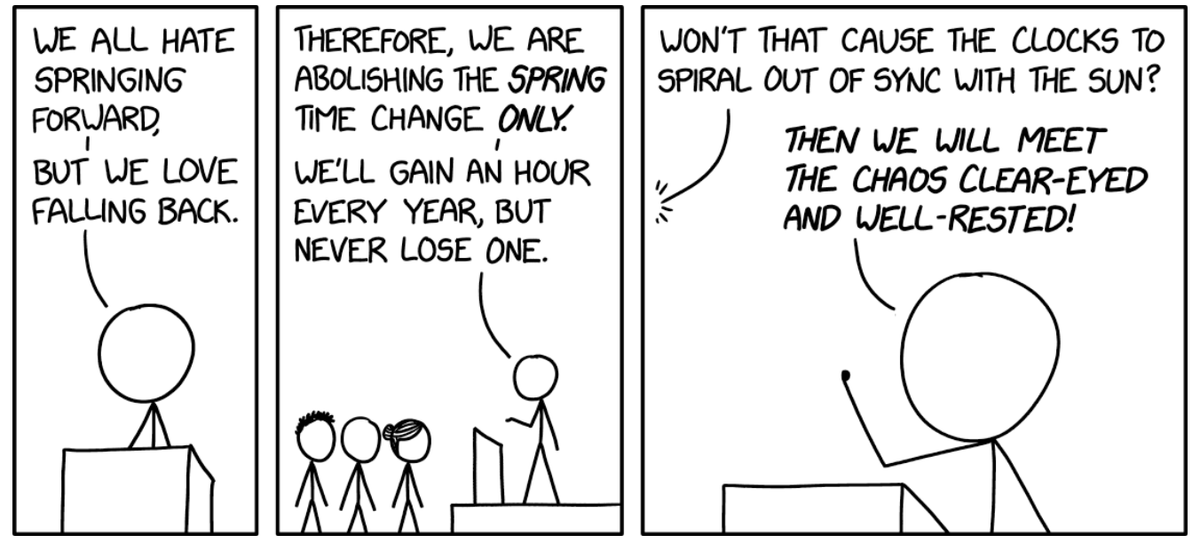
It’s time for us community-minded anti-capitalists to rethink the meaning and value of unscheduled time. If you love your people and your community and you’re committed to having their backs, then perhaps the white space in your calendar isn’t so much a self-indulgence as it is a service. Let me explain.