What Predicts Helpfulness in Primate Species?

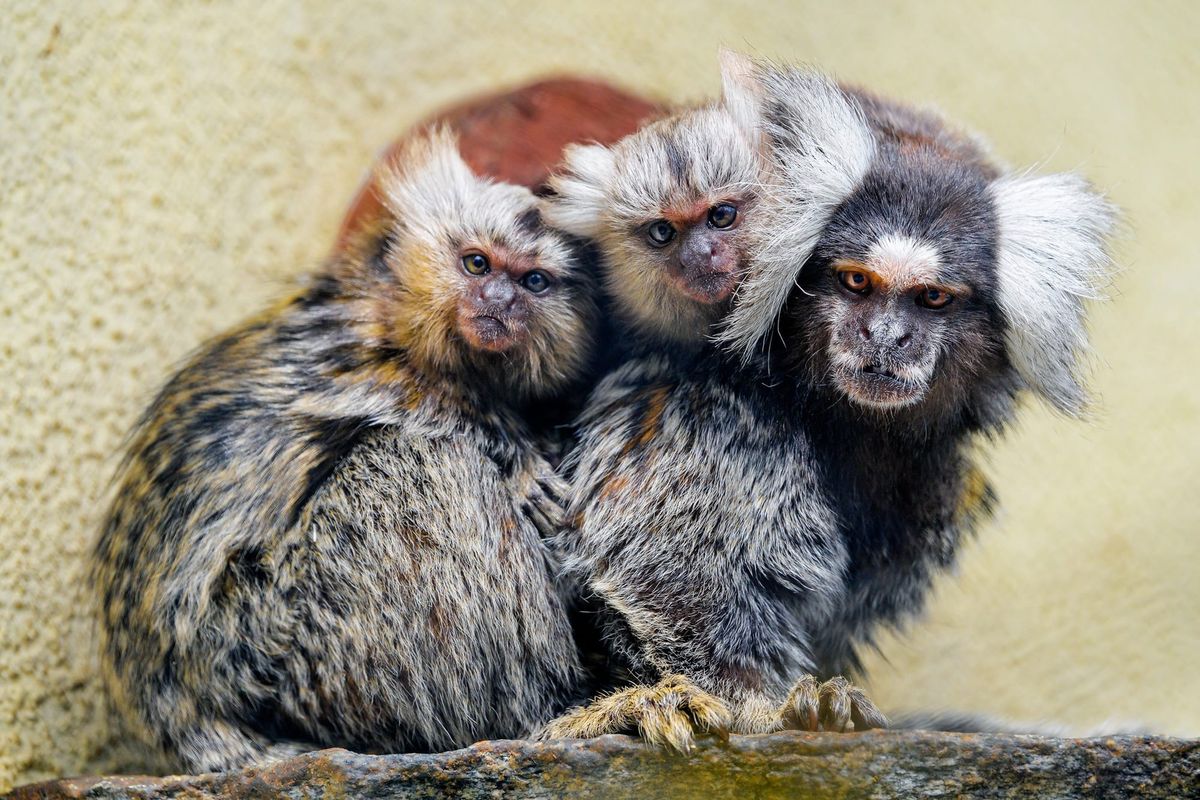
I’ll give you three guesses…
It’s time again for The Auntie Bulletin, hooray!
So did you make a guess about what predicts helpfulness in primate species, as the title of this post invites you to? I’ll give you three guesses and also a hint: the answer rhymes with “schmalloparents.”
You got it. First try, you clever thing. It’s alloparents.
Researchers have done the researching, and it turns out that when you give different primate species a task where they have a choice to help their fellows or not, the species where non-parents are involved in helping to raise young are the ones who opt to help each other out. Because of course they do. Helping, for these species, is wired in.
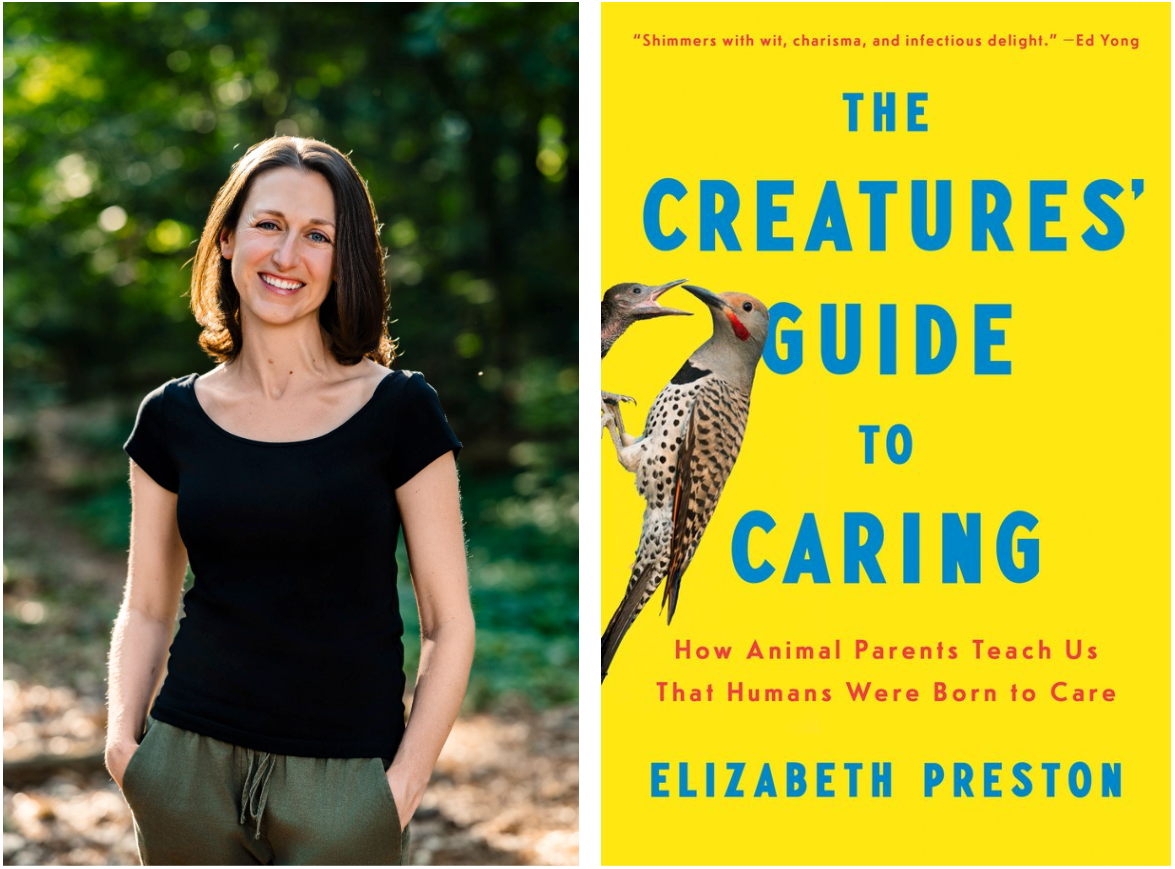
I found out about this by reading Elizabeth Preston’s recent book, The Creature’s Guide to Caring, which I highlighted the other week when Elizabeth guest-curated our July care package. As I said then, The Creature’s Guide is hereby my go-to on the subject of our evolutionary alloparental origins. I wrote:
Whenever I’m interviewed, I’m asked to define auntiehood. I start by talking about the concept label “aunt,” which refers to a parent’s sibling or the spouse of a parent’s sibling, and how somebody can be an aunt without ever having met the child in question. By contrast, I explain, an “auntie” is someone who loves and helps care for someone else’s kids. We’re what researchers call “alloparents,” and we’re found in every human society throughout all of human history. In this, humans are not alone: alloparenting is a key behavior for many animal species, from prairie dogs to warblers to elephants to humpback whales, because cooperative breeding and rearing of young often supports reproductive success.
Elizabeth Preston has literally written the book on the subject, and it’s a really good one: deeply researched as well as warm and funny and realistic, and you know that’s my favorite vibe.
Today, let’s read part of her book! In what follows, you’ll read an excerpt of The Creature’s Guide to Caring – a part that really gets into the alloparentalness of it all. You’ll read about the experiment referenced above, in which primate species opt to help or not. It involves tasty treats on a sliding board outside a window. An individual can slide the board toward the group so everyone can reach a treat, but in that case cannot reach the treats themselves. Tamarins, marmosets, lemurs, chimpanzees, and human children: guess who helped each other? Human children, yes – but some other species, too.
Alloparents are essential. Your paid subscription sustains this community resource for all of the friends of the family, grandparents, godparents, step-parents, foster parents, older siblings and big cousins, as well as those who care for kids for a living.
Along the way, we’ll hear from a researcher whose life was saved by a stranger’s act of bravery, learn what happens in a rat’s brain when she’s protecting baby rats, and find out about the World Giving Index trendline over the past decade. (The news on that front is actually good, which I personally would not have guessed, but I’m very happy to know it).
Elizabeth’s whole book is so good. You should hella read it.
Also, if you’ll be in the New York City area on September 22 at 5:30pm, you can see Elizabeth read at the Tompkins Square Public Library with Perrin Ireland, author of Poking the Squid: What We Can Learn from Animal Sex. (Elizabeth describes it as “graphic nonfiction in every sense, like a gorgeous and raunchy Magic School Bus”).
Alright, let’s do this. Over to you, Elizabeth!
Abigail Marsh believes she owes her life — and, in a way, her career — to a stranger.
One night when she was nineteen, Marsh was driving down the freeway in Washington state when a dog ran in front of her wheels. She swerved and sent her car spinning like a top across the road. When she came to rest, the car was in the fast lane, facing backward into oncoming traffic. The engine was dead.
Marsh was sure she was about to die. Then help arrived: Another driver stopped his vehicle, dashed across four lanes to reach her, and helped her get her car going again. Then he disappeared.
When that stranger decided to pull over and run to the disabled car, “this guy could have easily died,” Marsh tells me. She’s now a psychologist and neuroscientist at Georgetown University who has dedicated her career to understanding why humans help each other — even, in some cases, risking their own lives for someone they’ve never met.
“What gives people the capacity to care about others?” Marsh says. “How is that possible?”
Instead of measuring humans’ helpfulness in the lab with experiments or games, Marsh has studied people who make high-stakes altruistic decisions in real life. For example, kidney donors.
She scanned the brains of people who’d donated a kidney and compared them to other people’s brains. She found one clear difference: The kidney donors had a larger right amygdala.
The amygdala is a little almond, deep inside each side of your brain, that (among other roles) is critical for emotions such as fear. The amygdala helps us react to frightening things, Marsh says — but it also lets us understand when someone else is afraid. People with damaged amygdalae struggle to recognize fear in others, or to imagine what would scare someone.
In experiments, Marsh found that the kidney donors’ extra-large amygdalae were also reactive to other people’s fearful expressions. She thinks this hypersensitivity to others’ distress is part of what drives extraordinary acts of altruism. But she also thinks the amygdala plays a key role in everyday acts of helping, the little things we do that don’t require major surgery.
Why should your amygdala notice someone else’s distress in the first place? Shouldn’t an animal, trying to survive and not be eaten, focus on threats to its own neck?
The answer, Marsh says, is that our brains put this system in place to care for our kids.
Research has shown that the amygdala grows after childbirth. Amygdala activity is also linked to close, sensitive parenting in both fathers and mothers. In brain scans, babies’ primary parents — female or male — had heightened amygdala activity when watching videos of themselves with their infant. Even beyond that, Marsh says, “the amygdala is the gateway to the parental care system.”
Can I ask you, briefly, to consider a rat? The rat’s brain is similar to our own, with a much skimpier outer cortex for thinking and reasoning, but basically the same equipment underneath.
When the rat senses danger, its amygdalae tell it to freeze. In an experiment, scientists taught rat mothers to fear the smell of peppermint by lightly shocking their paws. When the trained rats smelled peppermint, they froze.
But when trained rat mothers had their pups with them, they didn’t freeze. They got a whiff of peppermint and sprang into action. Mothers of older pups nursed and groomed their kids, staying in close contact. Moms of young pups shoved their bedding material toward the tube that was releasing the smell, as if trying to bury the threat behind a wall.
What drove these actions, scientists found, was oxytocin acting on the amygdala. When they blocked oxytocin from reaching a rat mom’s amygdalae, she froze as usual.
Oxytocin is a famous hormone that neuroscientists have called “the ‘grease’ of the social brain.” It’s critical for pair bonding, but the hormone really shows its star power when it comes to parenting.
On the day of childbirth, a mother’s brain suddenly blossoms with receptors for oxytocin, like a superbloom in the desert. Oxytocin tells her body to squeeze out the baby and squeeze out milk. It helps a parental control center in the hypothalamus to link her baby to her brain’s reward system, so that the smell of a particular fuzzy head becomes intoxicating. The chemical helps her amygdala to motivate her into action, driving her to care for another in addition to herself.
But in some mammals, evolution has opened up that brain circuitry so that it can be accessed without pregnancy and childbirth. That’s why, for instance, a virgin female mouse who shares a cage with a pup can tap into that same motivational loop in her brain and start caring for the baby alongside its mom.
The Auntie Bulletin is a weekly newsletter about practical everyday kinship.
Neuroscientist Michael Numan and others have suggested that human history went something like this: The circuitry for care in our brains, originally accessible just to mothers, came unlocked. The door swung wide open. Fathers, siblings, neighbors, and all kinds of others now found it rewarding to be caretakers of children.
On top of this machinery, which we share with other cooperatively breeding animals, our increasingly huge brains added some flourishes. We got really good at empathizing, and understanding the intentions of others. This let kids and mothers know which caretakers to trust. We got better and better at cooperating. It felt good not just to care for kids but to take care of each other. We became the planet’s weirdest apes.
There are other primates that work together. In one study, researchers tested helpfulness in fifteen primate species, including lemurs, monkeys, chimpanzees, and human children.
They put groups of each animal in a cage or a room with a sliding board just outside a wall or window. Participants could see that one end of the board held a tasty treat. The other end had a handle that someone could pull to bring the food closer to the group. But if you were the one holding the handle, you couldn’t reach the food. And if you let go of the handle, the food would slide away again. So you could only access treats for others to grab, not for yourself.
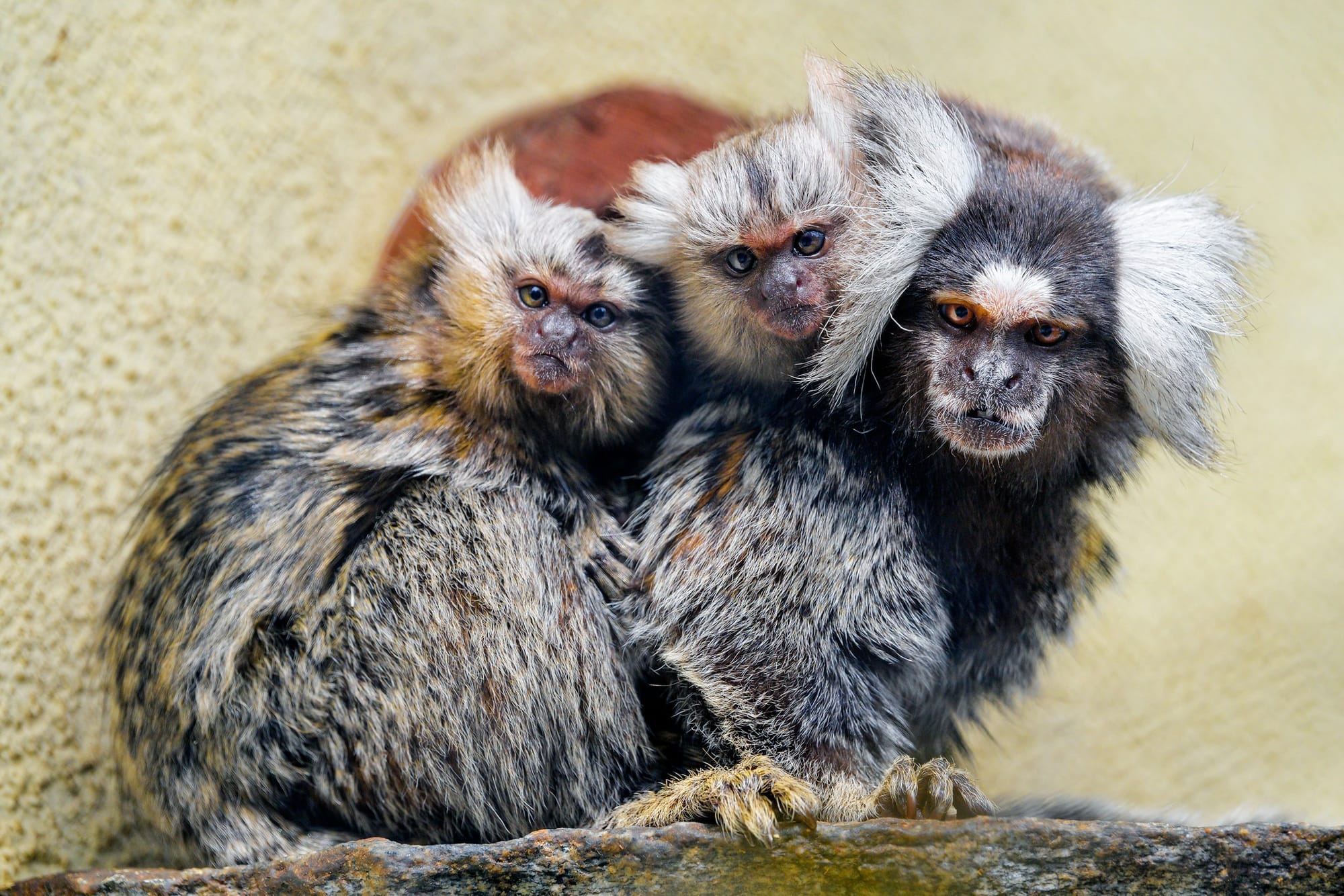
Some animals opted to pull the handle so that their neighbors could reach the food (and maybe share it). Others didn’t bother. The researchers found that the only factor predicting whether animals worked together was how much alloparenting their species did. The primates most likely to help each other were marmosets and tamarins — tiny-brained Central and South American monkeys that raise their young cooperatively.
Oh, and the human children.
The kids, like the other primates, learned how the apparatus worked—but they used it differently. In two groups of five-year-olds, the kids spontaneously formed lines. They took turns as the board-puller and the treat-getter. A group of six-year-olds found a plastic bag in the room and started collecting treats to share with the other half of their class, who weren’t there that morning.
The world can feel like a cruel jungle, but human care persists.
Every year, a group called the Charities Aid Foundation uses surveys from 142 countries to calculate a “world giving index.” The surveys ask people whether, within the previous month, they’ve donated money, volunteered their time, or helped a stranger. Over the past decade, the global average score has actually gone up.
“We have so much care pouring out,” Marsh says. “We just have that urge. And it shoots out, somehow or another.”
From THE CREATURES’ GUIDE TO CARING by Elizabeth Preston, published by Viking, an imprint of Penguin Publishing Group, a division of Penguin Random House, LLC. Copyright © 2026 by Elizabeth Preston.
Nothing Sold, Bought, or Processed
The Auntie Bulletin is an ad-free, feminist, anti-capitalist publication that will never try to sell you anything. We donate 100% of affiliate revenue from Bookshop.org to organizations supporting vulnerable kids. We’re currently supporting NICWA, the National Indian Child Welfare Association. Learn more here.
If today’s post made you think or helped you out, please take a moment right now to become a paid subscriber. This newsletter is a form of carework and carework advocacy, and it’s how I make a living.
Thanks for reading all the way to the end! You get the secret scoop that if you can’t afford a paid subscription due to financial hardship, you can email me at auntiebulletin at gmail dot com and I’ll comp you a 12-month paid tier subscription, no questions asked.