Here’s Your End-of-August Care Package

We’re heading into a busy time of year. Take a break and read something nice.
Aunties, it’s time for your monthly care package: a collection of writers and others communicating wise, compassionate, funny, insightful, surprising, and/or useful stuff around the internet and sometimes off the internet. As you may know, I aim for a blend of organizing and activism, community care, useful stuff, catharsis, and good old fashioned escapism.
Guest curator Elizabeth Preston kicks off this month with a bunch of excellent recommendations – many of them blessedly analog – apropos of her area of expertise, which is a fascinating one: the care behaviors of animals and what they teach us about how humans were born to care. Then I’ll round things off with a bunch of my own suggested links to check out.
Among other things, this month I’m recommending:
- An essay on 00’s quirk, which retriggered my envious resentment of Zooey Deschanel and manic pixie dream girls everywhere
- A Clue-era interview with a Tim Curry who’s clearly tired of responding to questions about whether the butler did it
- A brilliant idea for what to give out at kids’ birthday parties instead of cheap plastic junk
- A kitchen renovation
- A community slushy machine
- Hot fat marmot madness
- And of course, a few of my favorite recent tributes to Dolly Parton, America’s greatest auntie
Note that I’ve included gift links where possible, and gift links often expire after 30 days.
Make it to the end of the roundup to watch the cute kid video of the month. This month it’s a little one who’s really, really excited about a traffic cone. I guarantee you there’s a reason this one went viral on the internet.
August Around The Auntie Bulletin
I argued that auntiehood is the real “having it all” because we get to have childful lives and, at the end of day, we get to send the kids home to their parents.
Guest author Rhaina Cohen wrote about the time she and her husband decided to rent a house with their friends and their friends’ one-year-old, and what befell thereafter. Excerpted from Samantha Paige Rosen’s excellent new anthology, Living, Together: Reimagining Community in the Age of Disconnection.
I wrote about why the white space in your calendar is a service to your community.
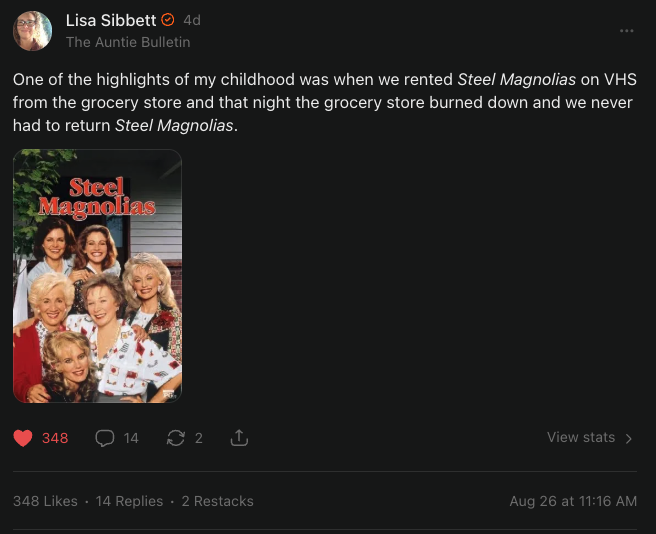
Our Guest Curator for August: Elizabeth Preston
Aunties, Elizabeth Preston’s new book, The Creature’s Guide to Caring, is the one I’ve been waiting for, and here’s why.
Whenever I’m interviewed, I’m asked to define auntiehood. I start by talking about the concept label “aunt,” which refers to a parent’s sibling or the spouse of a parent’s sibling, and how somebody can be an aunt without ever having met the child in question. By contrast, I explain, an “auntie” is someone who loves and helps care for someone else’s kids. We’re what researchers call “alloparents,” and we’re found in every human society throughout all of human history. In this, humans are not alone: alloparenting is a key behavior for many animal species, from prairie dogs to warblers to elephants to humpback whales, because cooperative breeding and rearing of young often supports reproductive success.
As of now, Elizabeth Preston is my go-to citation on that last bit. She has literally written the book on the subject, and it’s a really good one: deeply researched as well as warm and funny and realistic, and you know that’s my favorite vibe.
So she’s got some recommendations for us this month, many of which are books. I personally am very intrigued by the graphic nonfiction book about animal sex. (“Graphic nonfiction,” Elizabeth says, “in every sense”).
Over to you, Elizabeth.
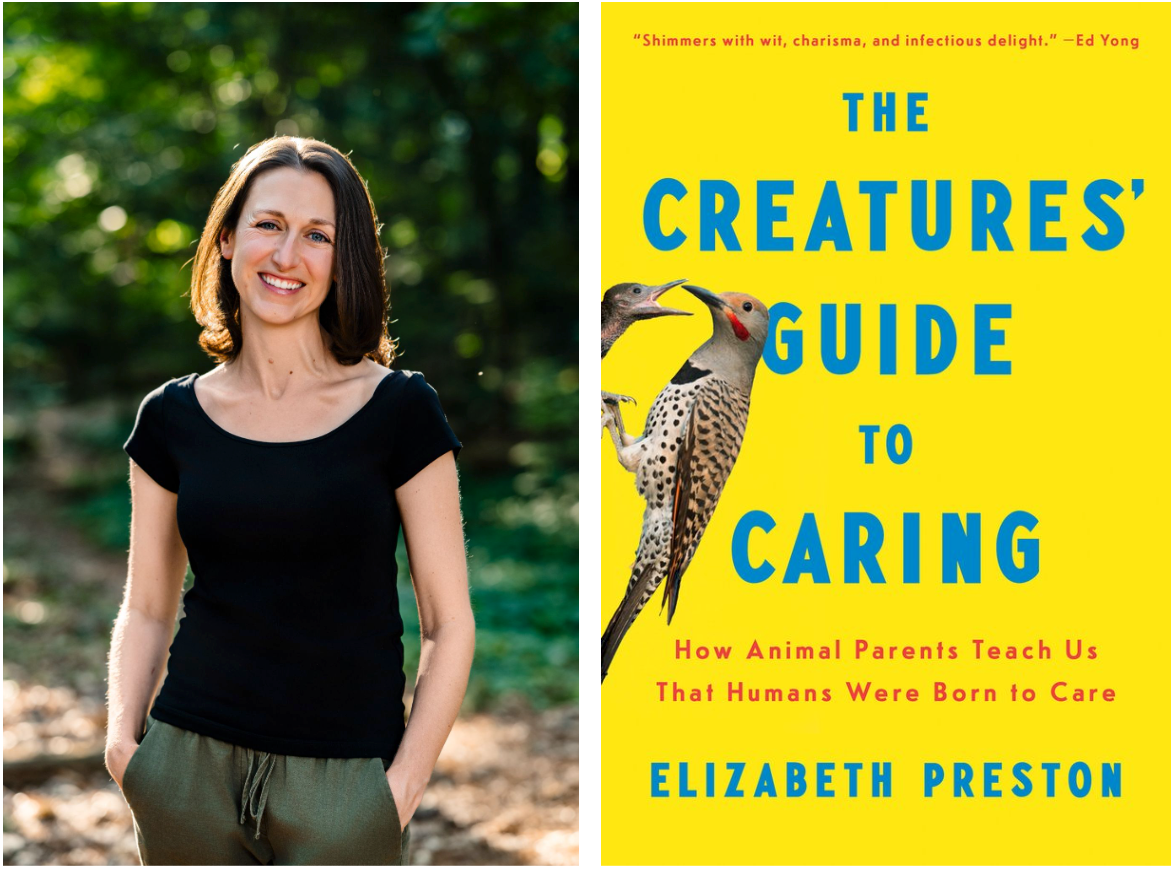
My first recommendation from my caretaking shelf is the work that provided a launchpad for my own book about the evolution of care: Mothers and Others, the 2009 classic by Sarah Hrdy, which argued that humans evolved by relying on aunties and other alloparents to help raise our kids. I even got to go meet Sarah on her walnut farm (along with her llama named Obama!) while I was writing my book. (Ed. note: Sarah Hrdy is my other go-to citation on animal and human alloparents – arguably the intellectual allomother of this entire newsletter).
Real Hrdy-heads will additionally enjoy her 1999 book Mother Nature. Some of the science is less current, but it’s a great read that includes juicy 19th-century gossip about a relationship between a Darwin contemporary and George Eliot, the author of Middlemarch. Actually, this is why I included a Middlemarch quote as an epigraph in my book—it’s kind of an Easter egg.
Since I mentioned it, have you read Middlemarch? If you’re open to big old books, it’s a treat.
A couple of more current recommendations for anyone interested in the science of dads: Hrdy’s newest book, about male caretaking across species, is Father Time. And Darby Saxbe, a psychologist and neuroscientist who appears in my book, just published a great and accessible book called Dad Brain. (Ed note: I interviewed Darby earlier this summer; read it here!)
It’s been a joy to connect with other authors. At an event this summer, I did a reading alongside Nicole Graev Lipson, whose memoir in essays is called Mothers and Other Fictional Characters. I was delighted by the serendipitous echo of Mothers and Others, although she wasn’t familiar with it. I immediately picked up Nicole’s book. It was beautiful and I loved it, even though the final essay made me cry awkwardly on a plane to Amsterdam.
On the animal relationships side, another author friend of mine, Perrin Roosevelt Ireland, has a new book called Poking the Squid: What We Can Learn from Animal Sex. Perrin is a watercolor artist, and the book is graphic nonfiction in every sense. It’s like a gorgeous and raunchy Magic School Bus. (Perrin and I are doing a joint book event on September 22 in NYC!)
If you want to read about caring relationships between humans and animals, I’ll humbly suggest my own recent feature for Audubon, “Are Crows Really Our Friends?” This was a fun story to write that started with my sister’s backyard crow buddies and ventured into philosophy, neuroscience, and mythology.
Finally, I’ll mention two newsletters: author Jami Attenberg’s Craft Talk, and comedian Josh Gondelman’s That’s Marvelous! Whenever they appear in my inbox, they make me feel cared for.
Back to Lisa
September 13-18 is Family, Friend, and Neighbor Care Appreciation Week. I’m planning to check out this webinar on policy supporting FFN care and how we can build a shared future built around care.
If, like me, you are an elder millennial / young Gen Xer who was trying to be cool in the early 2000s, I heartily recommend Gabrielle Moss’s newsletter about the time period. This essay on 00’s quirk hits right at the heart of every pop culture phenomenon that mattered to me (whether I loved or hated it) in my 20s. Reading, I viscerally recalled my then-resentment of the manic pixie dream girl in general and Zooey Deschanel in particular. (Which doesn’t mean I didn’t enjoy New Girl).
Rest in peace, Tim Curry. I enjoyed this short, slightly irritated interview, interspersed with a bunch of his best scenes as the butler in Clue. “It’s a chance to build a new stereotype from the ashes of an old stereotype,” he tells the interviewer, “And besides it’s all that English actors ever get to play in America.” (Spoiler alert for one of this 40 year old movie’s three endings. Have you really not seen Clue?)
😭 or 😂: do your emojis make you look old? (gift link)
The Auntie Bulletin’s monthly care package is always free, because the world needs love and care. Your paid subscription helps keep us a going concern.
“I only had a few more months left in Korea. I would soon be flying home to Buffalo, where my beloved younger brother was being treated for brain cancer, to participate in my brother’s care.” Ryan Rose Weaver wrote a beautiful meditation on staying close to what matters when you’re between two seasons in life.
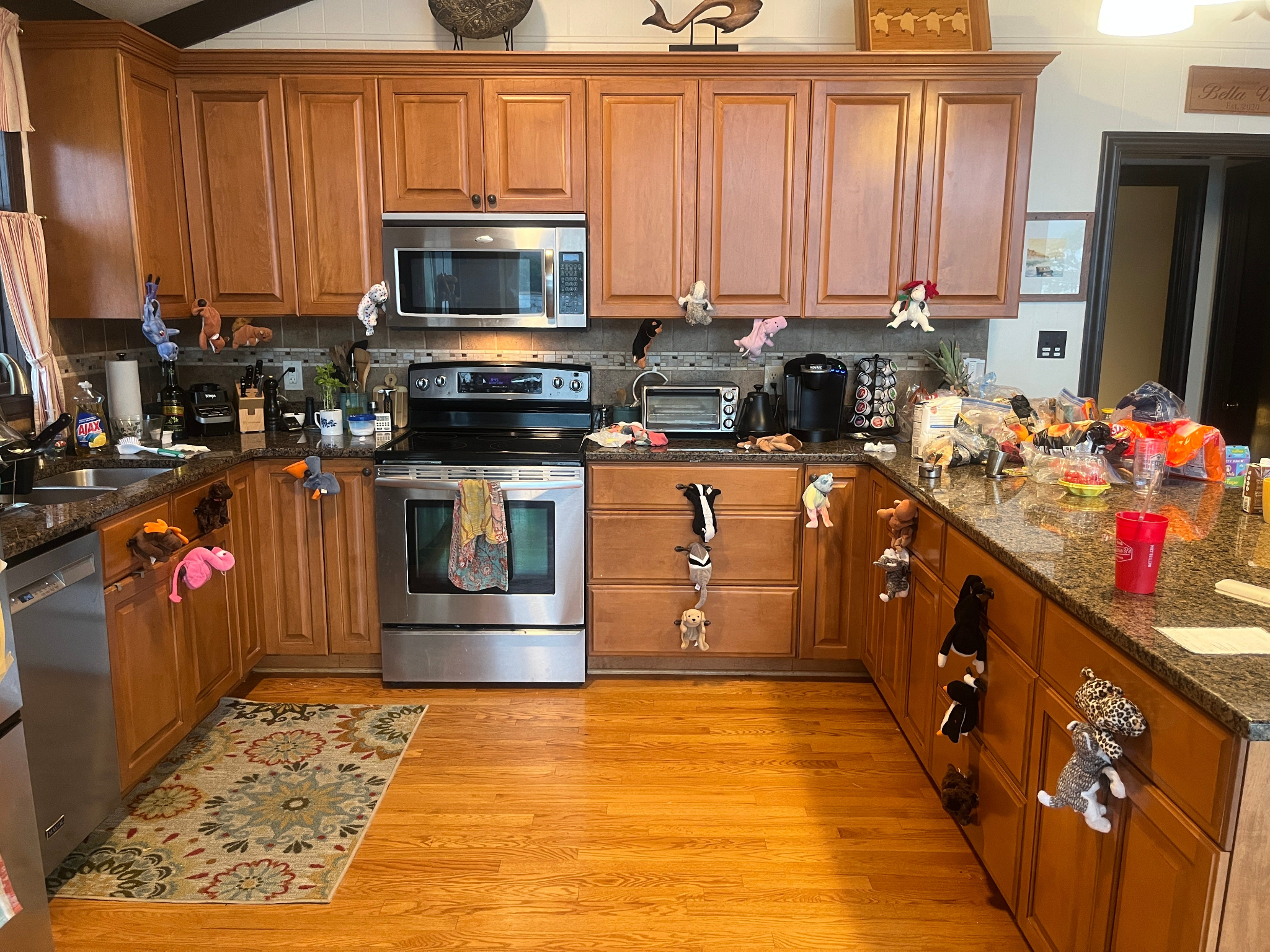
Sophie Lucido Johnson’s post about going in with her friends to collectively buy a $400 slushy machine, and how they manage its location and stewardship, is joyful and funny and delightful and such a good model of how we can share things in life. I sent it to my neighborhood WhatsApp group.
“She also recognizes that whatever marriage or motherhood choices she makes, a New York Latina cannot embody the aspirational presidential family. Nothing she does will satisfy the haters, so instead, she’s charting a new path that presents new political possibilities. As is often the case, the best choice for a woman of color creates better choices for all women.” Tressie McMillan Cottom wrote about AOC’s eggs and presidential ambitions. A must-read (gift link).
In The Atlantic, Jamele Hill writes about what’s happening to the WNBA right now – namely, “unprecedented growth and great basketball at risk of being swallowed up by the same culture wars plaguing the broader political landscape.” (gift link)

Brilliant idea for what to give out at kids’ birthday parties instead of cheap plastic junk.
You guys, solar-powered recycling that converts plastic garbage to clean hydrogen fuel is potentially becoming a thing. I’m cautiously stoked? Sure, plastic recycling as we know it is a notverymuchburger dreamed up by Big Plastic to convince us to keep buying products made from materials that will still be killing birds in 10,000 years (assuming any bird species survive that long). I’m no chemical engineer, but it seems like maybe this whole new solar-powered plastic recycling situation might be different and better? Somebody who understands this stuff, please inform.
Human prosperity depends on nature, but no global metric has yet captured it. Enter the Nature Relationship Index, which the UN will begin reporting this year. Yessssssssss.
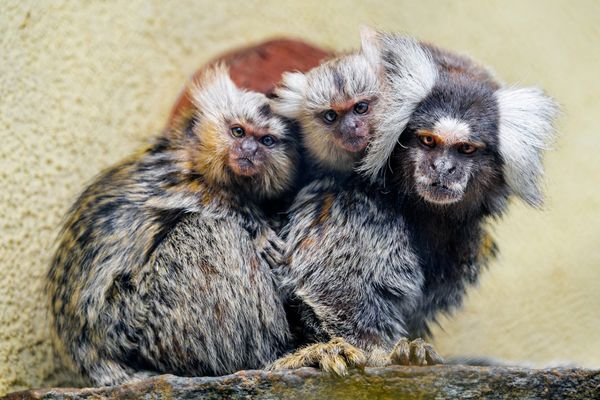
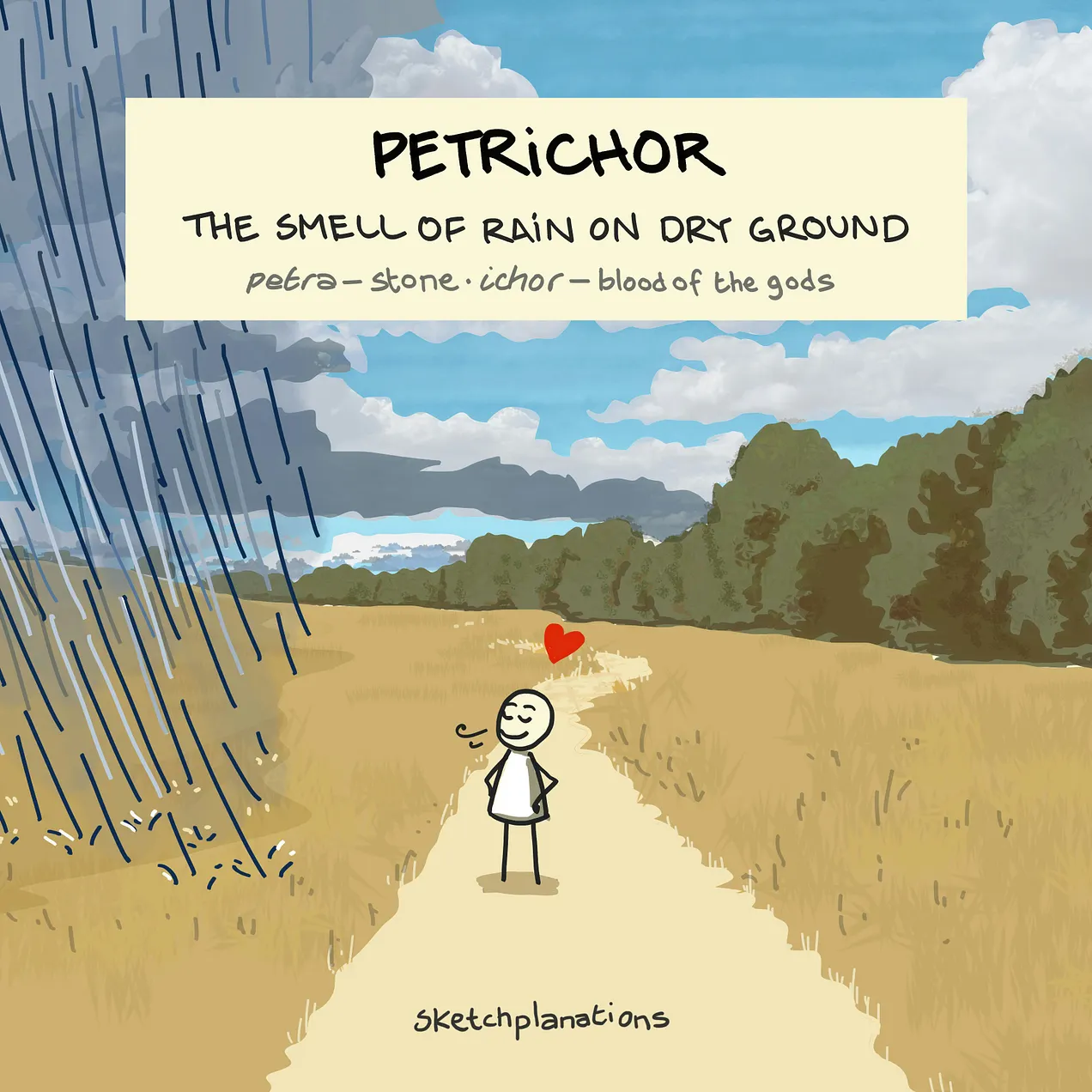
Hot fat marmot madness funds scientific research, because the U.S. government sure as hell won’t.
Daniel Lavery is a goddamn national treasure. I’m just proud of myself for not making my newsletter nothing but a restack of his newsletter. In addition to being a writer, he’s the activities director at a senior care center. He recently published an FAQ about how he parallel parked the facility’s big bus.
QUESTION #12: Close to the curb, and everything?
ANSWER: Less than six inches from the curb. It was textbook. I tell you, it was a textbook parking job on a 10-passenger bus with a nine-foot clearance. And this time a year ago I could not have taken such a bus out of the alley without scraping the dumpster, or the retaining wall!
QUESTION #13: Did anyone see you do it?
ANSWER: Not anyone I know.
QUESTION #14: I’m so sorry.
ANSWER: Please, don’t be. It was nothing. It was nothing.
QUESTION #15: What did you do afterwards?
ANSWER: I called one of the residents on my private cell phone to tell her what I had done. And I knocked on my general manager’s door, interrupting a meeting, to tell her.
QUESTION #16: Only human!
ANSWER: I very nearly called my mother, who I hate, such was my ebullience.
Anne Helen Petersen’s post on how the current digital landscape discourages reading shows why she’s one of the greats. So good.
And here’s Garrett Bucks doing what likewise makes him great. “Let’s see some mariachi, step shows and Indigenous beadwork next to the dahlias and jam. And let there be more fairs! And more appreciation for the thousands of community celebrations that serve similar functions– pow wows and Pride and Juneteenth and Puerto Rican Day parades. Those too are pristine offerings. Those too will never die. Because every fair is a sacred and profane missive to the broader world: the people who live here are worth it. They are fascinating and talented. Did you see their cakes and photography? Holy cow, what work. Let’s eat some corn dogs.”
Priya Parker has a new book coming out (it’s going to be cool, it’s called The Art of Fighting and it’s about how to engage well in healthy conflict), but the reason I’m telling you about it right now is that she wrote a lovely post about reviewing the book’s draft index.
Steve Way is a very smart disability justice writer, activist, and actor whose work I’ve been appreciating a ton lately. Here he is writing in TIME magazine about the “consolation prize” of representation: “I’ll spend this month promoting a television show… and watching my own healthcare coverage get more precarious, doing the arithmetic on my care in the back of my mind while I smile for cameras.”
Speaking of disability, I’m still thinking about Kat Vellos’s essay on what a city’s outdoor seating says about its values. I can’t comfortably stand for long, and I hadn’t recognized how much my homebody tendencies stem from the lack of comfortable places to sit down in public.
What makes a place home? A beautiful reflection by Diana Fox Tilson on returning to a childhood hometown when everything has changed.
The poet Maggie Smith invited listeners to request “poetry prescriptions” for hard times, and Auntie Bulletin reader Katie phoned in with a request for a poem to help while wrestling with not being able to have children. Check out the final 8 minutes to hear Maggie reading to Katie: Rilke’s “Go to the Limits of Your Longing.” Beautiful.
Here, Shankar Vidantam explains why knowing family history – the happy stories and the sad stories alike – makes children more resilient.
Claire Zulkey interviewed a mom whose kid, Jonah, has Down syndrome, autism, and hearing loss. The moment I read that this child loves signing “Mommy was WRONG,” I was in. A loving, realistic, f-bomb laden conversation.
For Our Lady of Love and Rhinestones
Dolly Parton embodied who I want to be as a creative person: warm, kind, and so supportive of her colleagues and the musicians and creators coming up after her. She was one of our greatest auntie role models.
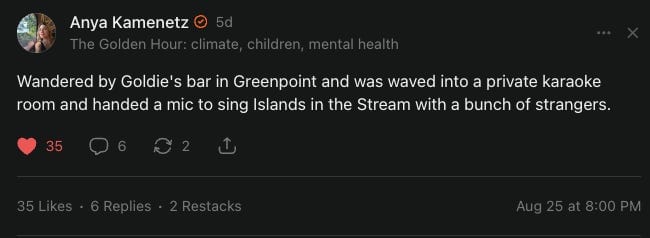
Here are a few of my favorite recent tributes to Dolly Parton’s life and music.
“Dolly said no to Elvis and waited for Whitney.” Poet Dorianne Laux with two poems: “I Will Always Love You” and “Dolly’s Breasts.”
A beautiful short tribute from Dolly’s 1990s editor at HarperCollins.
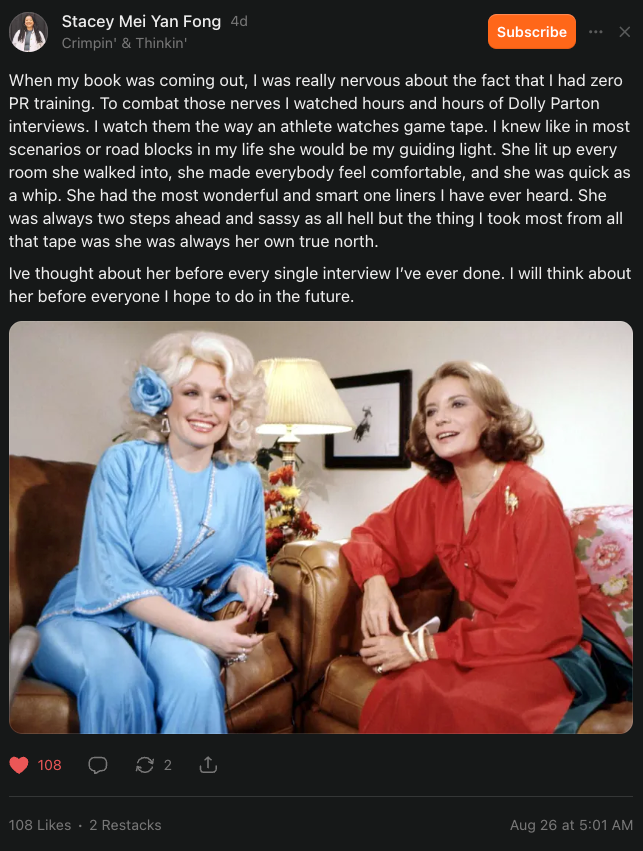
Rebecca Solnit’s tribute to Dolly is excellent: “She had a way of treating social justice like down-home common sense.”
“At your next family get-together, set aside fifteen minutes where the ‘kids’ teach a short class to the adults, showing them how to organize apps, delete what they don’t use, and walk through how they decide whether something they’re looking at is fake, altered, or real. Let everyone share a time they were tricked by something on their phone, and how they figured it out. Sharing that kind of vulnerability is good for everyone at the table, especially because the next time it happens to someone in the family, they won’t feel so ashamed. If this seems awkward, it’s got to be easier than suffering through the next “political” debate at the family dinner table or suffering through the stilted superficial conversation we have to avoid that political debate.” The real screen addicts aren’t teenagers, they’re Baby Boomers.
Finally, it’s time for your cute kid video of the month. Surprise! It’s a baby polar bear with his head in a traffic cone.
Nothing Sold, Bought, or Processed
The Auntie Bulletin is an ad-free, feminist, anti-capitalist publication that will never try to sell you anything and donates 100% of revenue from Bookshop.org affiliate links to organizations supporting vulnerable kids.
If today’s post made you think or helped you out, please take a moment right now to become a paid subscriber. This newsletter is a form of carework and carework advocacy, and it’s how I make a living.
Thanks for reading all the way to the end! You get the secret scoop that if you can’t afford a paid subscription due to financial hardship, you can email me at auntiebulletin at gmail dot com and I’ll comp you a 12-month paid tier subscription, no questions asked.